New model guides lighting design to help aging eyes see colors better
Researchers from Fudan University in China and OPPLE Lighting developed a computational model to improve color perception for adults aged 70 and older.
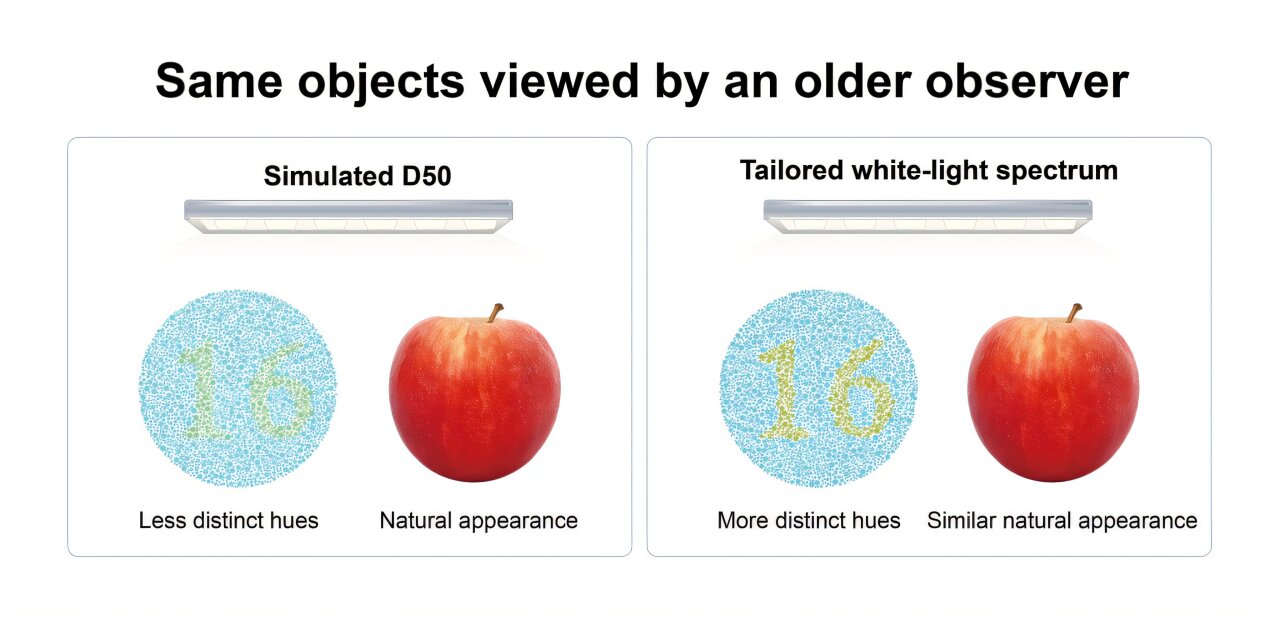
Aging eyes filter short light
The lens inside the human eye gradually yellows as people get older. This natural process absorbs more short-wavelength light and makes similar colors harder to distinguish. The new model accounts for these specific age-related changes in vision.
Study tested lighting on volunteers
Scientists used the model to design lighting spectra that adjust how white light mixes wavelengths. A group of adult volunteers aged 70 and older participated in the testing phase. The resulting lighting improved color discrimination compared with a standard LED daylight reference while keeping familiar colors looking natural.
Design aids daily tasks
Better color perception could help older adults remain confident and independent when performing routine activities. Reading labels and sorting medication become easier with this adjusted lighting approach. The study results were published in the journal Optics Express.
Reported by one outlet
Only one outlet has published this. Nothing here has been checked against a second report, so read it as that outlet's account and follow the link below for the original.
Reported by
1 independent outlet. Headline as published. Links open the original report.