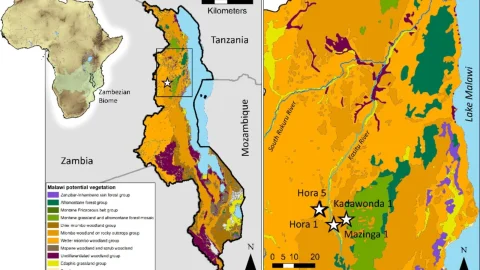
Ancient Malawi bones reveal how early humans shared food resources
Researchers in Malawi are analyzing animal bones to understand the social interactions and territorial strategies of ancient foraging communities.
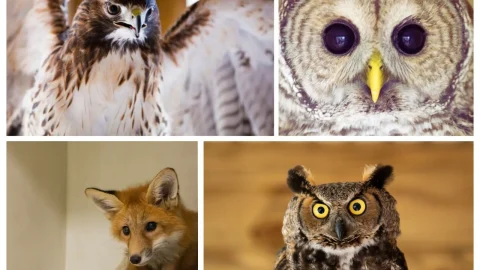
A Tufts University study published in 2020 found that anticoagulant poisons used against rodents are killing hawks and owls.
NTNU historians and international collaborators published new analyses confirming a well-documented South Sámi presence in Central Norway dating back to the Middle Ages.
Scientists at the Wu Tsai Neurosciences Institute demonstrated a new method using light-emitting nanoparticles and ultrasound to edit genes in specific regions of mouse brains without surgery or implants.
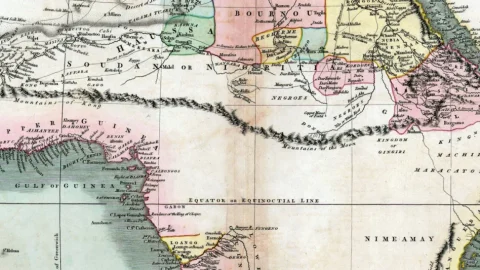
Recent studies reveal that European cartographers relied heavily on Indigenous knowledge when mapping West Africa during the colonial period.
Scientists identified a new thermophile amoeba that reproduces at 145 degrees Fahrenheit in a study published in September 2026.
Researchers from Yale and Shanghai Jiao Tong University report that giant impacts can help rocky planets retain their hydrogen-rich primordial atmospheres.
UC Riverside researchers measured microplastic pollution in seven remote Sierra Nevada locations during recent snowstorms.
Researchers and students at the University of Alabama in Huntsville tested a prototype lunar landing pad this summer.
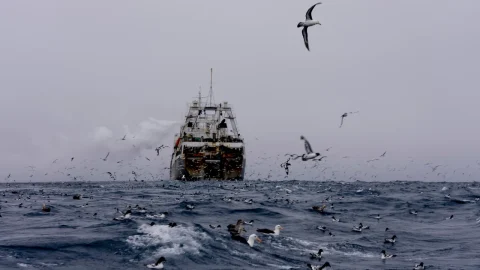
Oceanographer Sylvia Earle called for a stop to krill harvesting near Antarctica while governments in Australia debated new fishing quotas.