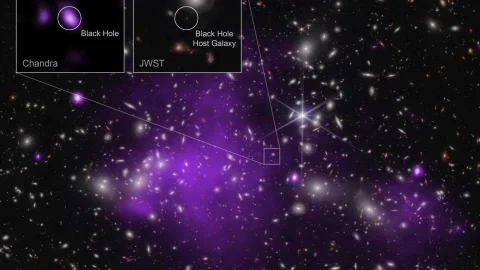
New data challenges early universe black hole claims
A team led by Fan Zou of the University of Michigan reanalyzed X-ray and infrared data from galaxy UHZ1 to challenge previous claims of a massive black hole.
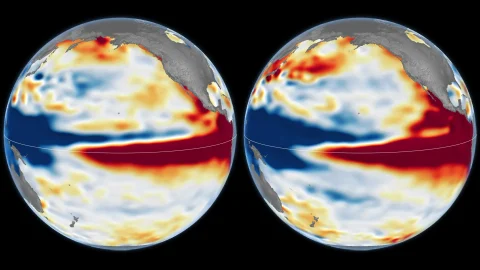
NASA scientists warn that the 2026 El Niño developing in the equatorial Pacific could surpass the historic 1997 event by November 15.
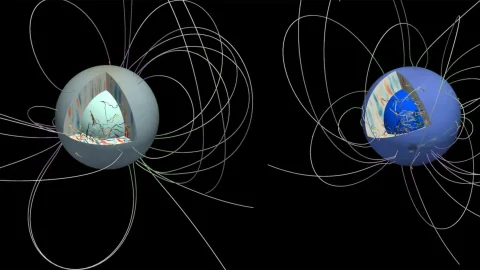
Scientists at The University of Texas at Austin propose a new explanation for the tilted magnetic fields of Uranus and Neptune published in Communications Physics on November 15, 2026.
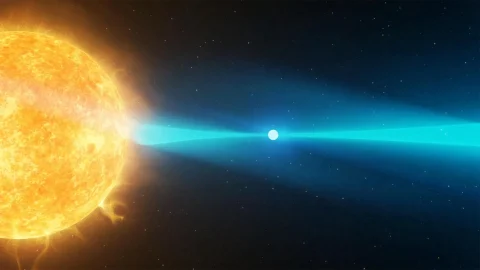
Researchers at Curtin University found a white dwarf orbiting a Sun-like star 5,000 light-years away that spins every eight minutes and emits mysterious radio signals.
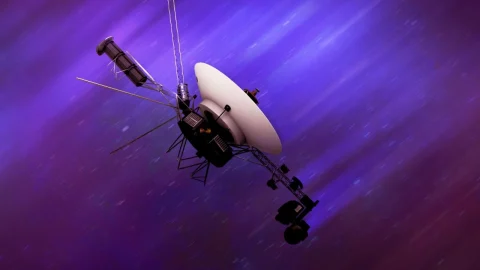
NASA's Voyager 1 probe will pass the one light-day distance mark from Earth at 5:16 a.m. ET on November 18.
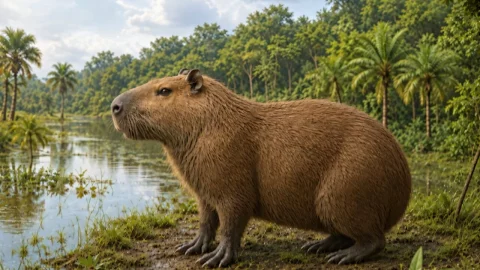
An international team of paleontologists discovered fossils of a new giant rodent species at the Bang Mark Pit in Krabi Province, southern Thailand.
A research team led by the Met Office Hadley Center published findings in Nature Climate Change on January 1, 2026, stating that previous global warming levels determine continued heating even after carbon dioxide emissions cease.
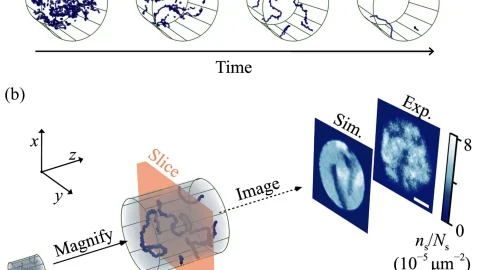
Researchers at the University of Cambridge observed tangled quantum whirlpools unraveling in a potassium atom cloud on November 15, 2026.
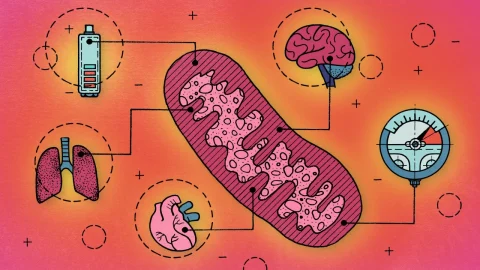
Scientists at Boston Children's Hospital are injecting fresh mitochondria into newborn hearts to treat critical defects and improve recovery from life support.
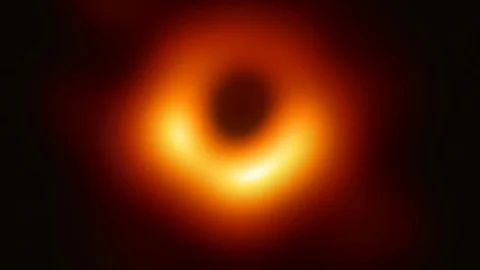
A research team published independent results in Nature on April 10 confirming the accuracy of the first black hole picture released by the Event Horizon Telescope Collaboration.