Astronomers identify spinning dead star sending radio pulses near Sun-like companion
Researchers at Curtin University found a white dwarf orbiting a Sun-like star 5,000 light-years away that spins every eight minutes and emits mysterious radio signals.
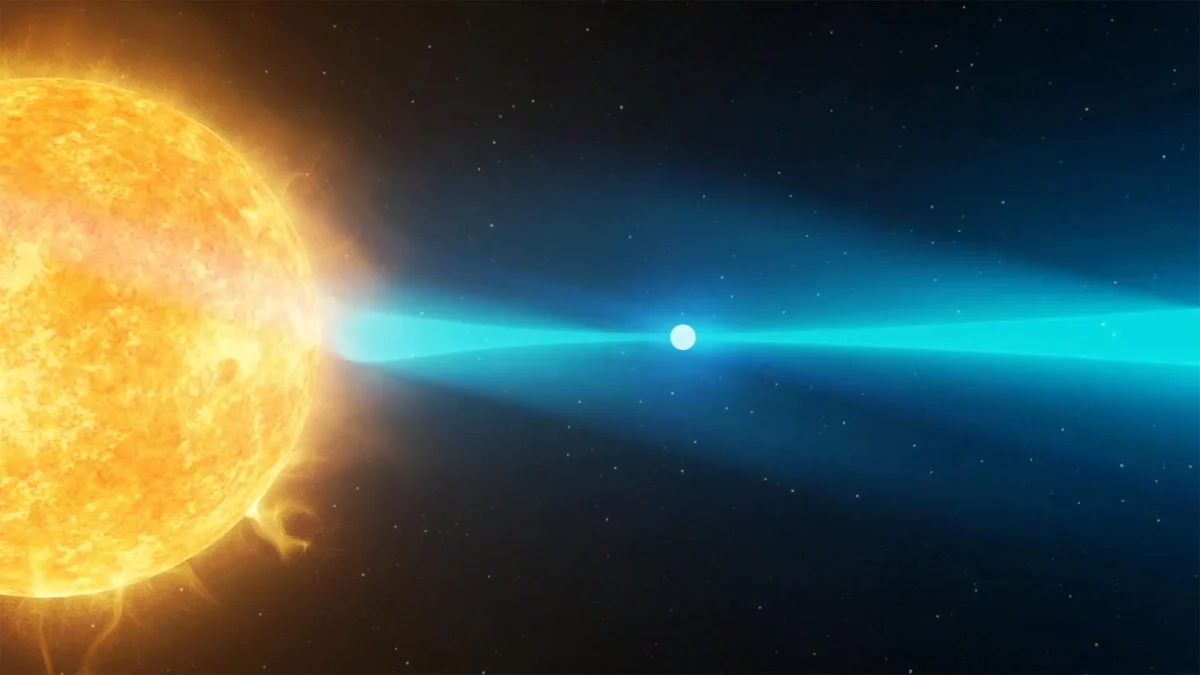
New stellar pair detected far away
Scientists traced unusual radio signals to a system designated GPM J071507−114153 located more than 5,000 light-years from Earth. The system contains a white dwarf and a G-type star that orbit one another in a rare configuration. This marks the first time researchers identified such pulses where a white dwarf circles a Sun-like star instead of a red dwarf. The dead star rotates every eight minutes while generating these mysterious radio bursts that appear and disappear over long periods.
Observations reveal magnetic activity on companion
The research team analyzed more than 100 hours of data using computing resources at the Pawsey Supercomputing Research Centre. Dr Sam McSweeney, who led the study, stated that their precise observations enabled them to follow the white dwarf as it orbited its companion. These detailed radio observations revealed massive magnetic storms occurring on the Sun-like companion star alongside the pulsations from the dead star. Until now astronomers struggled to determine which member of a pair produced emissions but this discovery solves that question.
Breakthrough helps understand long-period transients
This system belongs to a group called long-period transients where objects produce radio emissions lasting from minutes to hours. The ICRAR team discovered the first known example in 2021 and has identified only about a dozen similar systems since then. These signals provide new insights into the beginnings of certain enigmatic astronomical events within our galaxy.
Reported by one outlet
Only one outlet has published this. Nothing here has been checked against a second report, so read it as that outlet's account and follow the link below for the original.
Reported by
1 independent outlet. Headline as published. Links open the original report.