University of Surrey researchers found an antifibrotic drug alters cell communication
A University of Surrey study published in the Journal of Extracellular Vesicles shows that the experimental compound SD-208 changes how cells release microscopic communication packages.
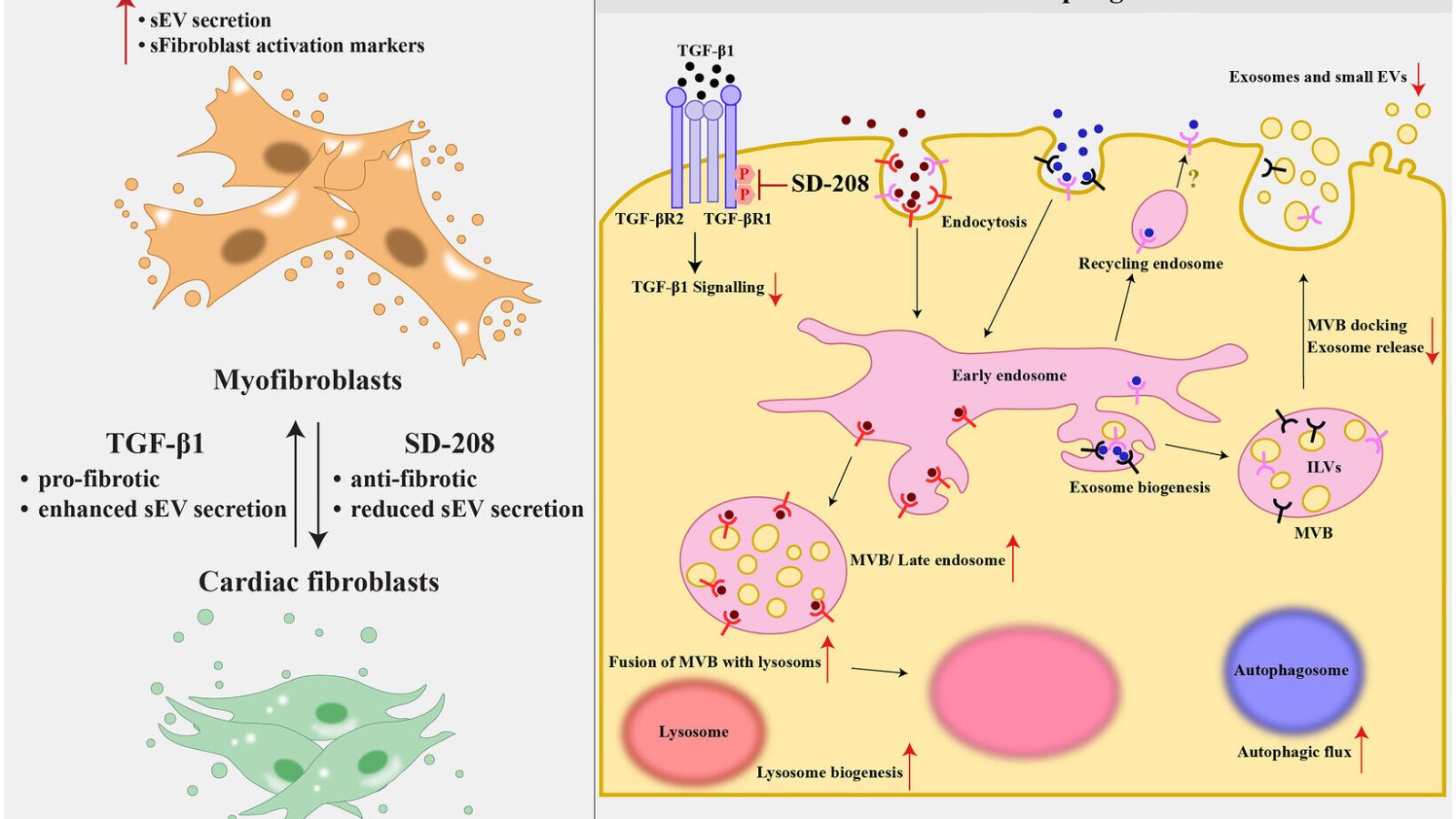
Drug redirects cellular waste internally
The experimental antifibrotic compound SD-208 substantially reduced the release of extracellular vesicles from cardiac cells. Instead of moving to the cell surface, these compartments were redirected toward lysosomes for breakdown. This redirection prevents the microscopic packages from carrying proteins and signals to neighboring or distant cells.
Effect is distinct from known uses
Researchers tested other compounds acting on the same biological target but found they did not reproduce this specific effect. The study suggests that the influence on vesicle release is separate from the drug's known ability to reduce scar tissue in organs. Dr Rahul Sanwlani noted that the reduced release of these packages emerged unexpectedly during their investigation.
Reported by one outlet
Only one outlet has published this. Nothing here has been checked against a second report, so read it as that outlet's account and follow the link below for the original.
Reported by
1 independent outlet. Headline as published. Links open the original report.