KAIST team develops new ligand design for copper catalyst reactions
A research team led by Professor Sarah Yunmi Lee at KAIST published a study in the Journal of the American Chemical Society describing a new ligand design that balances radical generation and catalyst regeneration.
New strategy for difficult substrates
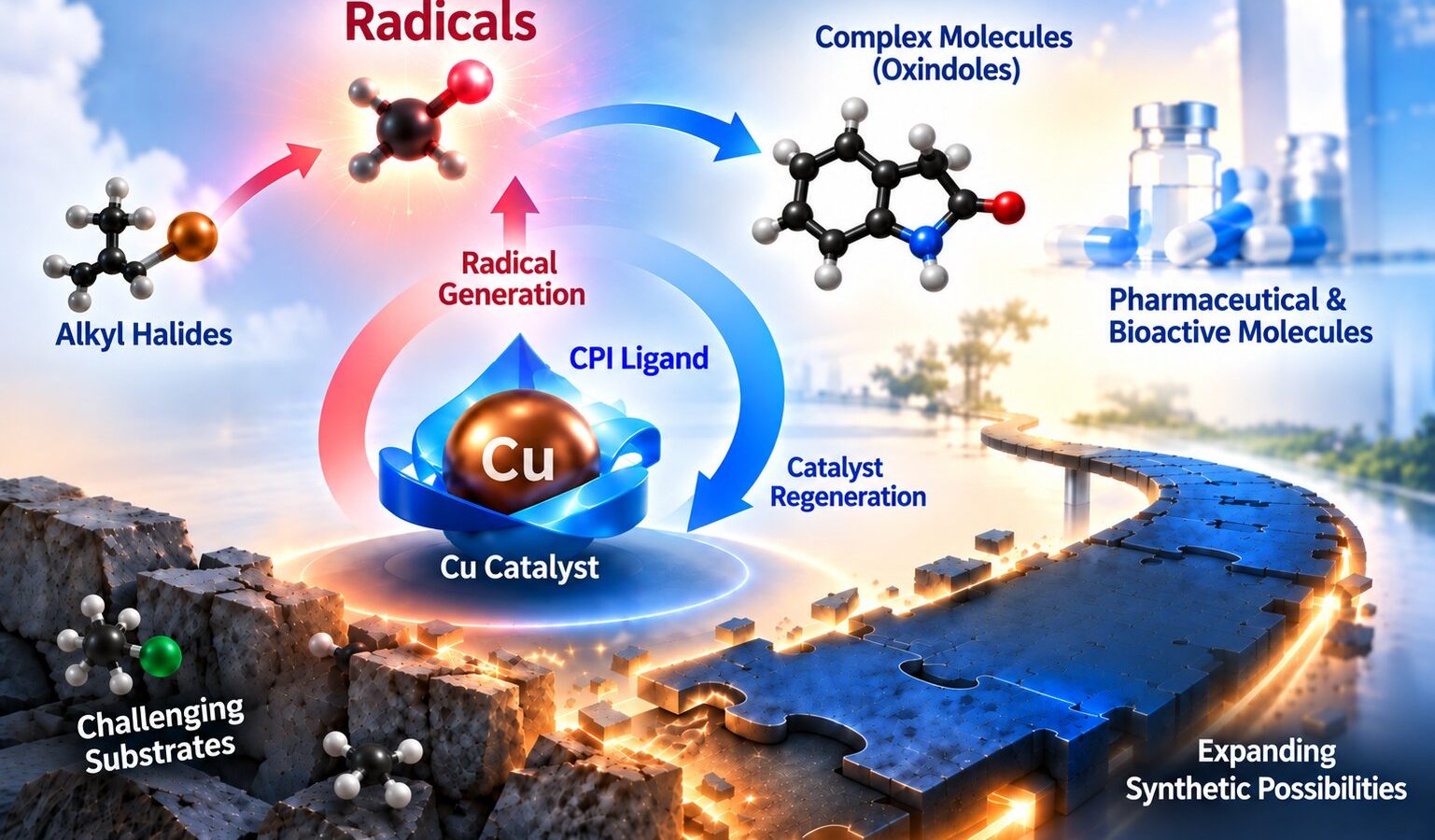
The researchers developed a method using a cyclopropenimine-based ligand to tune copper catalyst behavior. This approach helps the catalyst generate radicals effectively while returning to its active state. The work broadens possibilities for synthesizing complex molecules needed for pharmaceuticals and other applications.
Specific starting materials used
In this study, the team utilized tertiary alkyl halides as their primary starting materials. These compounds feature bromine or chlorine attached to a tertiary carbon center. When the copper catalyst breaks these bonds, it initiates the desired chemical transformation.
Reported by one outlet
Only one outlet has published this. Nothing here has been checked against a second report, so read it as that outlet's account and follow the link below for the original.
Reported by
1 independent outlet. Headline as published. Links open the original report.