African habitat restoration projects show mixed effects on surrounding tree loss
Researchers from the University of Sheffield and Cambridge analyzed data from nearly 130,000 sites across 27 sub-Saharan African countries to measure how restoration impacts nearby landscapes.
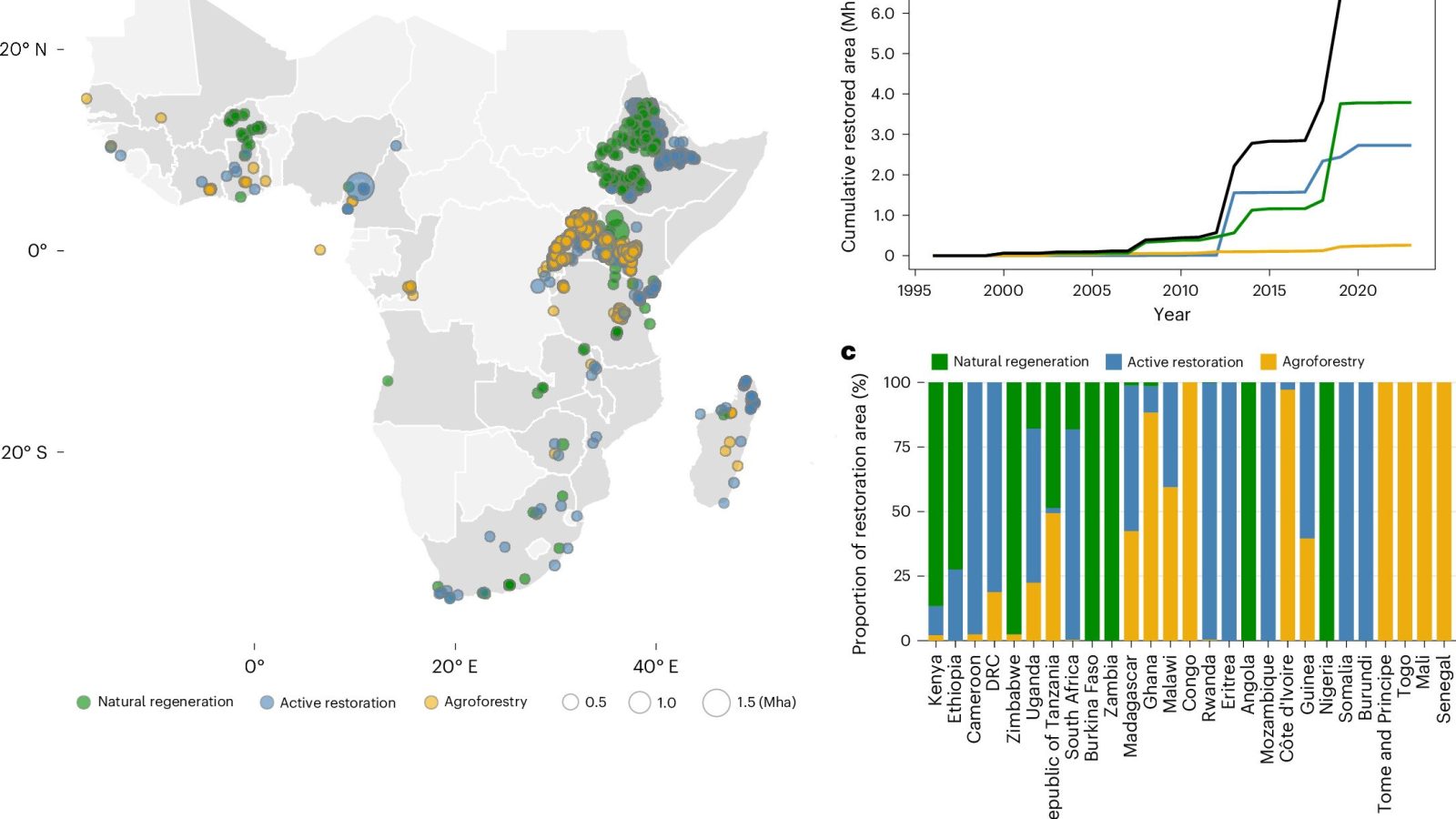
Study scope covers vast area
The team compiled a geospatial dataset tracking approximately 6.8 million hectares of land. They used decades of satellite imagery to compare tree cover changes inside and outside project boundaries. This approach allowed them to identify specific patterns of forest gain or loss in the wider region.
Different methods yield different results
Natural regeneration and active restoration techniques led to significant drops in tree loss within the designated zones. However, the research indicates that these benefits do not always extend equally to neighboring areas. Some projects successfully reduced deforestation nearby, while others saw increased tree loss beyond their limits.
Phenomenon known as leakage
Scientists describe this spillover effect as leakage where impacts spread into the broader landscape. The study distinguishes between positive leakage that helps surrounding forests and negative leakage that harms them. These contrasting outcomes highlight the complex nature of large-scale environmental recovery efforts.
Reported by one outlet
Only one outlet has published this. Nothing here has been checked against a second report, so read it as that outlet's account and follow the link below for the original.
Reported by
1 independent outlet. Headline as published. Links open the original report.