Sea squirts react to substrate vibrations rather than sound pressure
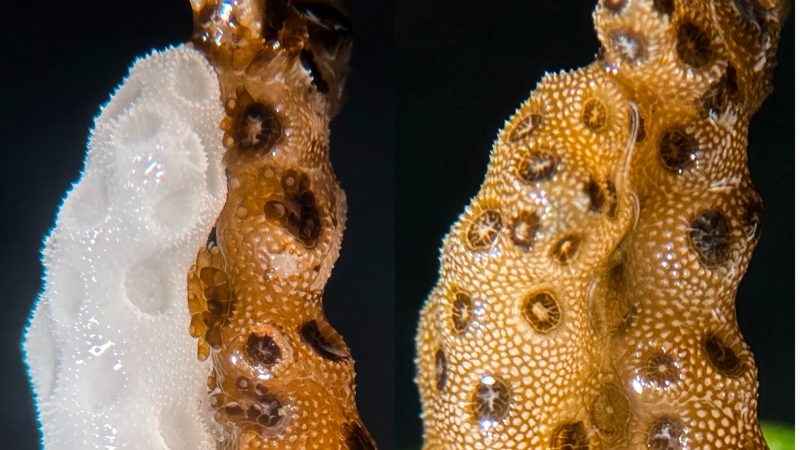
Researchers at Ruhr University Bochum found that sea squirts in the Mediterranean respond to low-frequency vibrations instead of sound pressure.
Researchers from the University of Nottingham led an international study published in the Journal of Happiness Studies that found specific early life factors predict adult well-being.
An international analysis by the Max Planck Institute for Human Development reveals that female researchers in psychology depart academia more frequently than their male counterparts, particularly during the first few years of their professional lives.
Scientists published a new tool in Science Advances that estimates how fast people are ageing based on their vocal characteristics.
US President Donald Trump hosted technology executives on Tuesday at the White House to announce America.gov and a plan to rename artificial intelligence superintelligence.
University of Queensland researchers unveiled a new software benchmark to improve artificial intelligence analysis of microscopic plant images at the European Conference on Computer Vision in Malmö, Sweden, from September 8 to 12.
UK researchers are using artificial intelligence to digitise millions of natural history specimens from institutions across the country.
The Philadelphia Academy of Natural Sciences will shut its doors after nearly two centuries because of severe financial difficulties.
A joint team from IRCCS Fondazione Istituto Neurologico Carlo Besta and Politecnico di Milano successfully applied a new coating to mitochondria while maintaining their function.
Reports indicate that the exoplanet LHS 1140b is emitting helium gas into space while orbiting a red star in the constellation Cetus.