Physicists propose detecting primordial black holes via star interactions
MIT researchers and colleagues published a study in The Astrophysical Journal describing how astronomers might detect tiny primordial black holes by observing their interaction with sunlike stars.
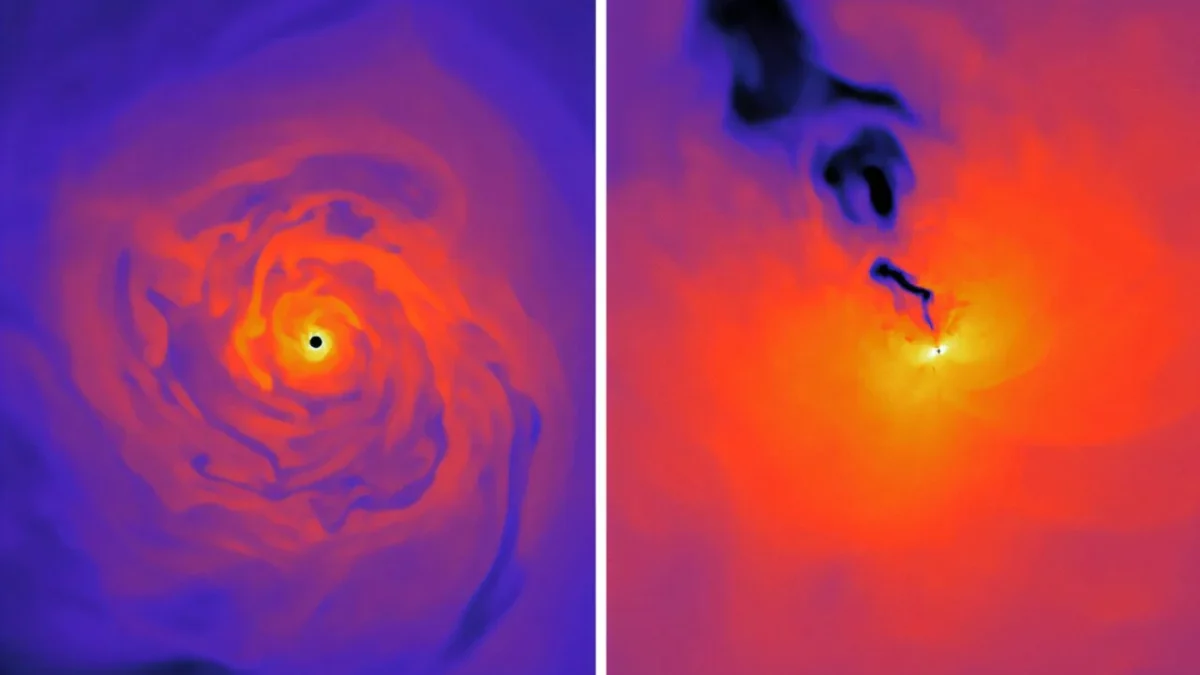
Simulations show black hole fate
Scientists hypothesized that minute black holes formed within dense pockets shortly after the Big Bang. These objects could represent a significant component of dark matter if ever found. Physicists at MIT and elsewhere calculated what happens when an atom-sized primordial black hole enters a sunlike star. The simulations reveal the object quickly falls into the star's core once captured by gravity. It then begins to devour the star from the inside while spinning rapidly.
Dramatic explosion and light flash
If the star spins sufficiently fast, a disk of stardust circles as it falls into the black hole. This formation acts as a death sentence for the star according to lead author Ore Gottlieb. Interactions between the black hole and the spinning disk launch powerful jets of matter within seconds. These jets pierce through the star and make it explode completely. The event generates a flash of blue ultraviolet light along with gamma rays and X-rays.
Detection hope for astronomers
Current telescopes in use today will easily detect the calculated flash, which is sufficiently bright. Gottlieb states there is hope to probe primordial black holes through these specific interactions with stars. The team expects this phenomenon to be visible and something scientists should look into immediately. Co-authors include Matteo Cantiello of the Flatiron Institute and Cameron Norton from New York University.
Reported by one outlet
Only one outlet has published this. Nothing here has been checked against a second report, so read it as that outlet's account and follow the link below for the original.
Reported by
1 independent outlet. Headline as published. Links open the original report.