Oxford researchers simulate Aharonov-Bohm effect in trapped-ion quantum computer
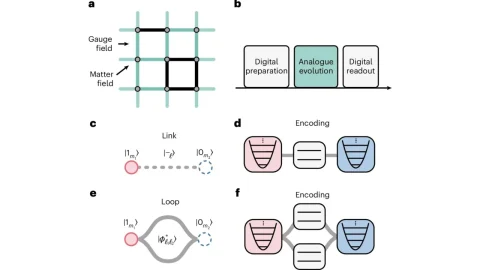
University of Oxford scientists used a hybrid trapped-ion quantum computer to simulate the Aharonov-Bohm effect within a Z₂ lattice gauge theory on November 7, 2026.
A Pakistani astronaut will fly to China's Tiangong space station aboard the Shenzhou-24 spacecraft on a mission announced Saturday.
Georgia Tech professor Mark Prausnitz and his team have developed tiny biodegradable particles that create microscopic openings in the skin to improve topical medicine absorption.
The Leonid meteor shower is set to light up the night sky across the United Kingdom from now until 30 November, peaking on the night of 17 November.
Researchers published new findings in Communications Earth & Environment on November 6, 2026, suggesting decades of plastic waste are changing the hue of the Pacific Ocean near the Great Pacific Garbage Patch.
Researchers at the South Pole Station are combining data from the SPT and BICEP projects to analyze patterns in the cosmic microwave background.
A team led by Professor Jonathan Webb released six captive-bred broad-headed snakes in the Shoalhaven region of south-eastern Australia.
Scientists explain how human activities fuel rising temperatures that worsen heatwaves, droughts, wildfires and floods around the world.
Almost 200 countries signed the Paris Agreement in 2015 to limit global warming, but the United States left the deal in January 2026.
Researchers at the Leibniz Institute for Catalysis in Rostock have developed a method to turn polyethylene waste into raw materials for nylon production.