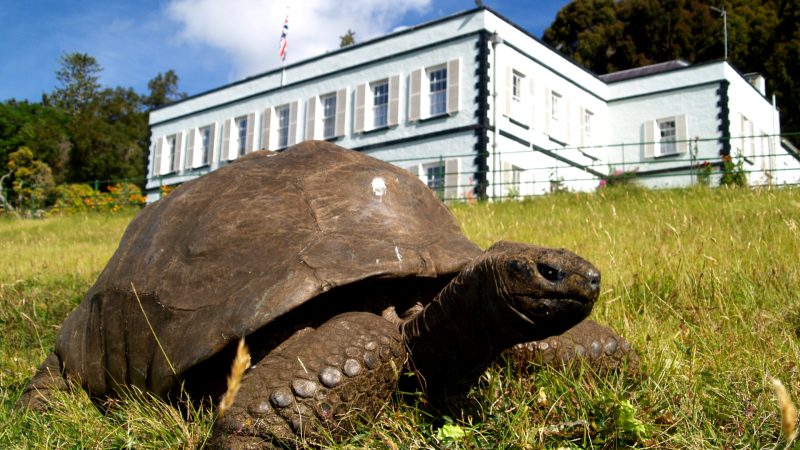
Researchers study 194-year-old tortoise to understand its slow aging process
Scientists examined the genome of Jonathan, a 194-year-old Aldabra giant tortoise, to identify genetic factors contributing to his extreme longevity.
Scientists examined the genome of Jonathan, a 194-year-old Aldabra giant tortoise, to identify genetic factors contributing to his extreme longevity.
A team at Rice University has developed a method to use single-objective light sheet microscopy in standard commercial sample chambers.
A team led by Pengcheng Dai at Rice University published findings on October 8, 2026, describing how quantum spins in an ytterbium compound behave like liquid crystals.
Millions of residents in the US Gulf region face Hurricane Isaias as it approaches the northern coast on Thursday.
New research indicates almost 300,000 residents currently inhabit flood-prone zones across the Nepalese Himalayas.
A study analyzing nearly 900 dogs from about 120 breeds found that larger canines accumulate DNA changes associated with aging more quickly than smaller ones.
STAT reporter Anil Oza and Heather Pierce from the Association of American Medical Colleges discuss how the National Institutes of Health distributed money in its latest cycle.
Reports describe how over 2,000 edible insect species are consumed across Latin America, Africa, Asia and Oceania.
A new study from the London School of Economics surveyed over 1,400 U.K. financial services employees to examine how gender and team composition affect reactions to work errors.
A Northwestern University study published on October 7, 2026, analyzed deaths among fathers in Georgia following the birth of their children.