Ames Lab researchers control magnetic wave handedness in new study
Researchers at the U.S. Department of Energy's Ames National Laboratory discovered a method to switch the handedness of magnons using an external magnetic field.
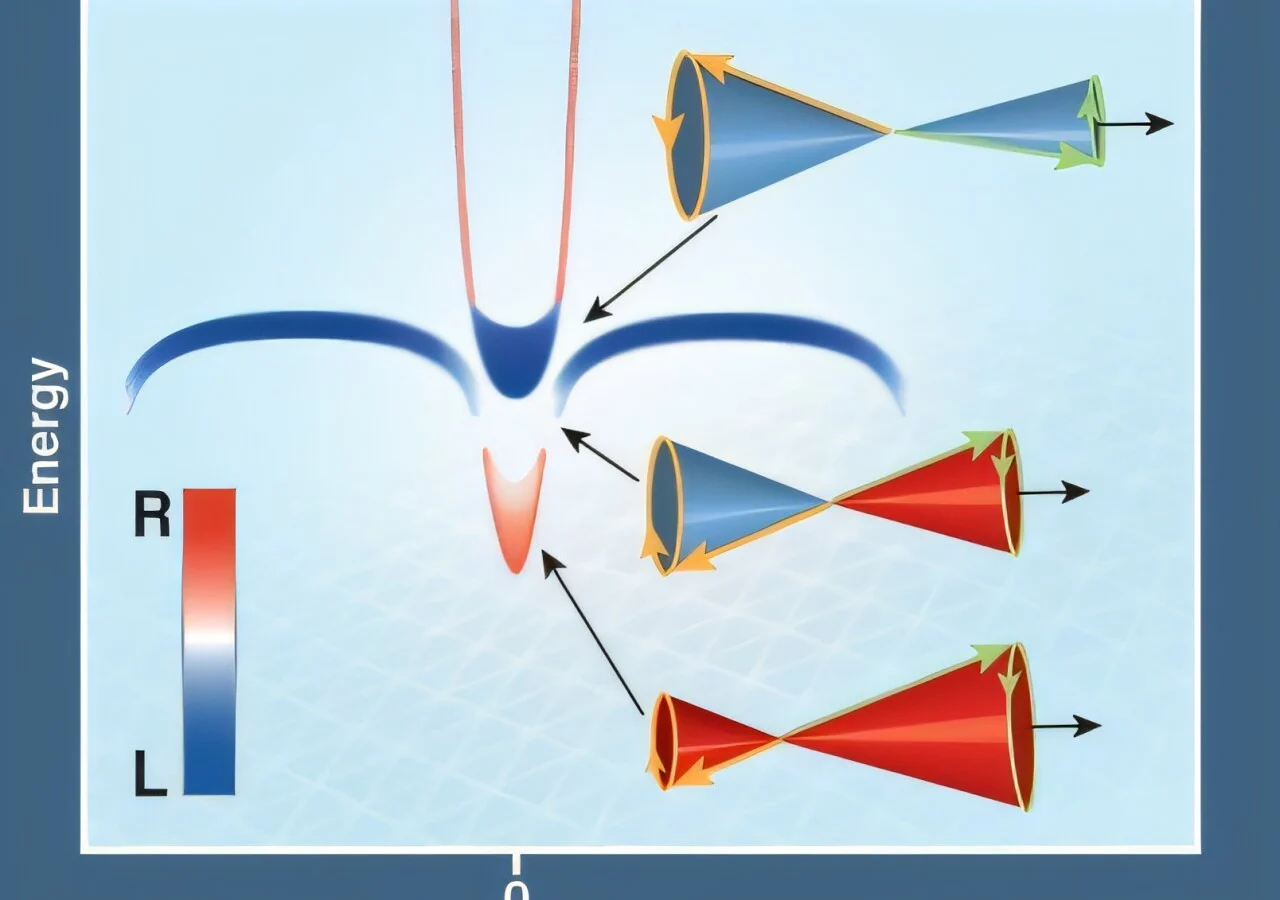
Scientists mix magnetic wave states
The team observed that magnons in certain kagome metals cross without interacting while others interact and avoid crossing. Scientist Rob McQueeney led the group studying magnetic excitations in materials like TbMn₆Sn₆ and ErMn₆Sn₆. They realized that right-handed and left-handed magnons were mixing under specific conditions within these ferrimagnets. This discovery allows scientists to switch a magnon's handedness using relatively little energy input.
Ferrimagnets host unequal magnetic moments
Ferrimagnets contain two types of magnetic atoms whose moments point in opposite directions but do not cancel out. These materials naturally host both right- and left-handed magnons forming separate bands of magnetic excitations. Normally different energies are required to excite each type, but the new method changes this dynamic. Energy and information can be transmitted by magnons without requiring electrical charge to move through the material.
New possibilities for quantum tech
The ability to easily control and combine these magnon states offers new possibilities for future magnetic-based quantum information technologies. Because magnons carry information more efficiently than conventional electronic technologies, this finding supports high-efficiency computing applications. The findings are published in Physical Review Letters with details available on the arXiv preprint server.
Reported by one outlet
Only one outlet has published this. Nothing here has been checked against a second report, so read it as that outlet's account and follow the link below for the original.
Reported by
1 independent outlet. Headline as published. Links open the original report.