Researchers at EPFL find halide ligands control platinum surface chemistry in solar hydrogen catalysts
Scientists from the LIMNO laboratory at EPFL published a study in ACS Energy Letters explaining how specific halides modify organic semiconductor nanoparticle photocatalysts to improve solar hydrogen production.
Halide precursors determine platinum deposition
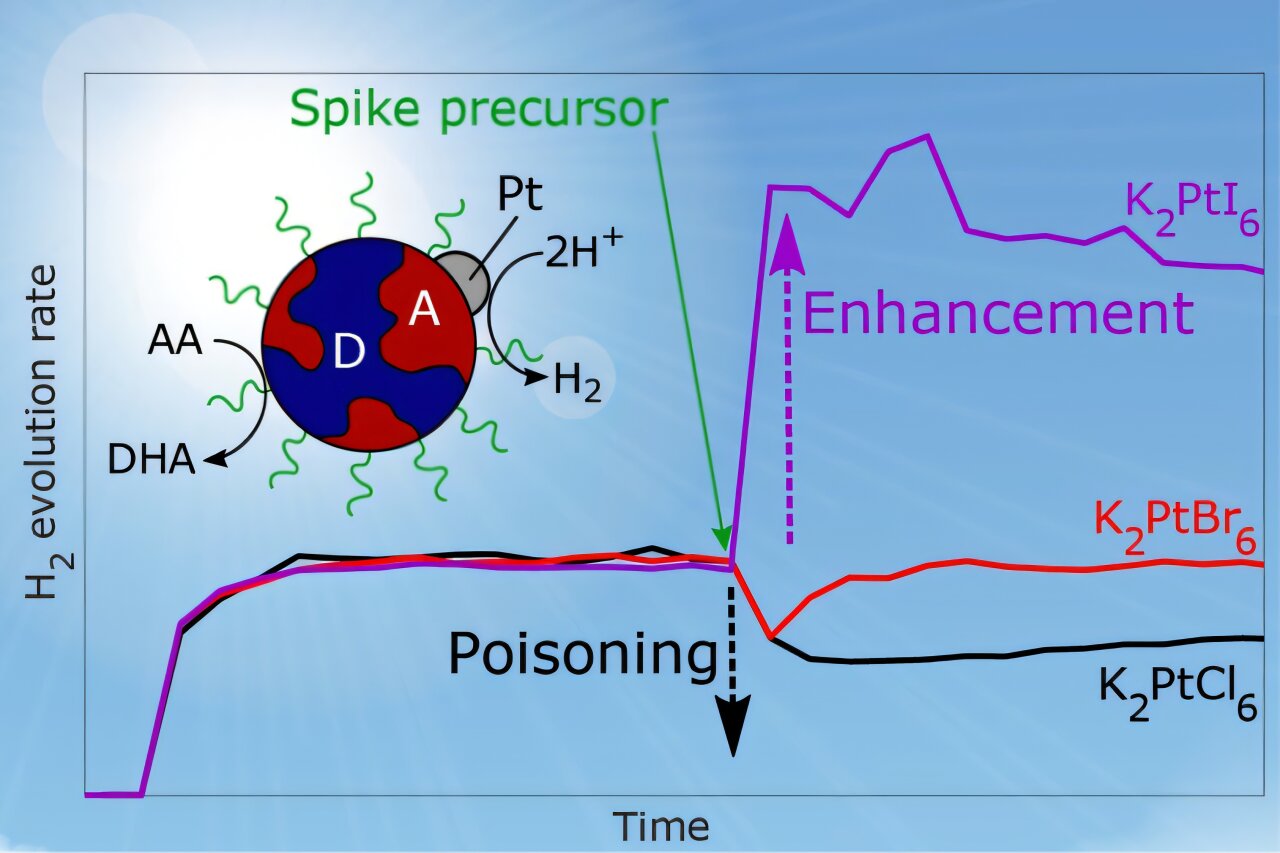
The researchers discovered that the halide ligand in hexahaloplatinate(IV) precursors critically governs the kinetics of platinum photodeposition. This process directly influences the resulting photocatalytic performance of the organic semiconductor nanoparticles.
Chlorine species suppress hydrogen evolution
Using chloroplatinate precursors leaves partially reduced platinum-chloride species adsorbed on the surface. These adsorbed species poison active sites and severely suppress the rate of hydrogen evolution.
Controlling chemistry boosts efficiency
By controlling these surface phenomena, the team significantly improved the solar hydrogen production efficiency of the materials. This approach addresses the high costs currently associated with solar-driven hydrogen production from water.
Reported by one outlet
Only one outlet has published this. Nothing here has been checked against a second report, so read it as that outlet's account and follow the link below for the original.
Reported by
1 independent outlet. Headline as published. Links open the original report.