New study links food and physics to marine animal group behavior
MBARI scientists Kelly Benoit-Bird and William Oestreich reviewed collective behaviors in pelagic animals for a paper published in Philosophical Transactions of the Royal Society B.
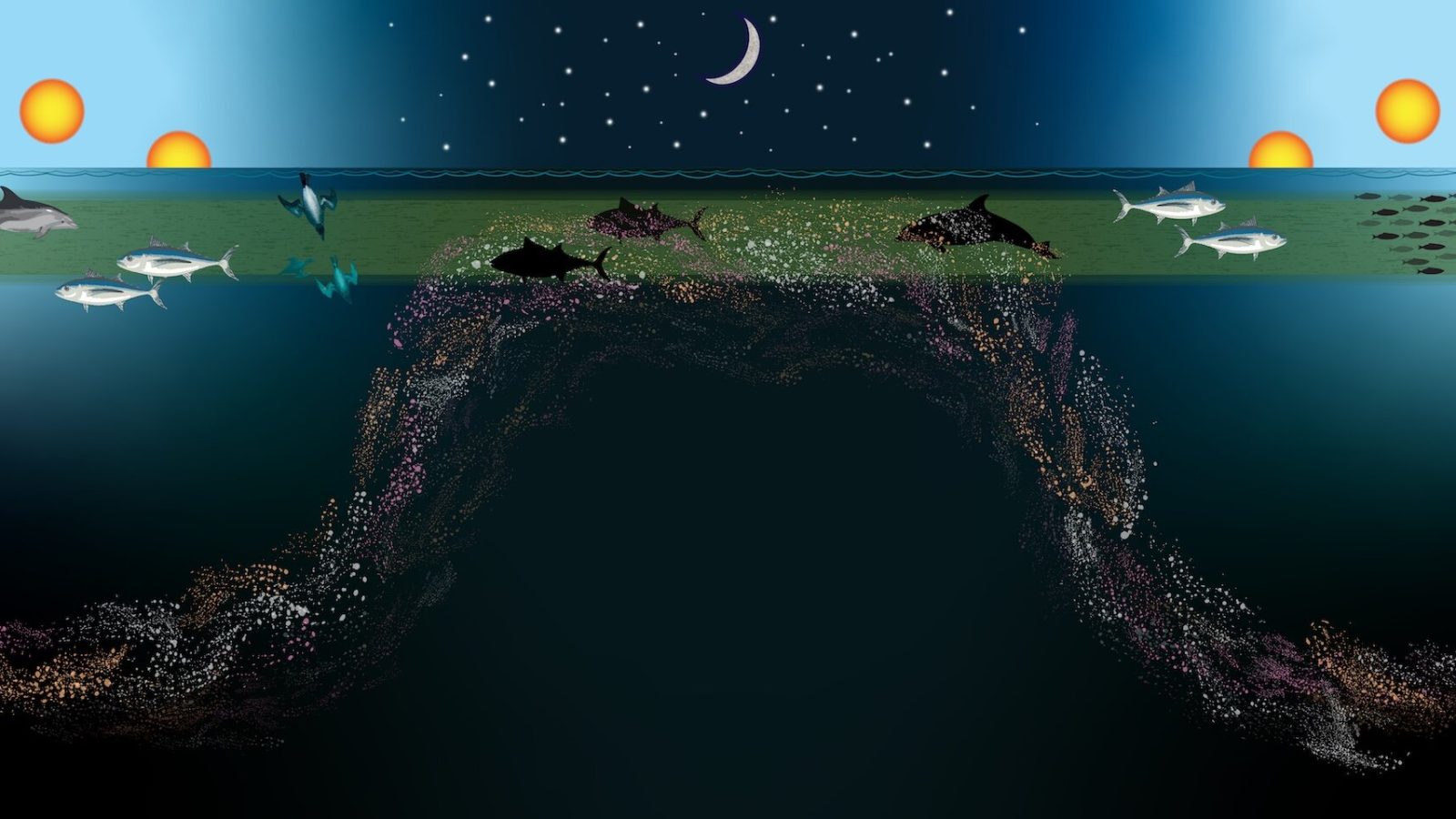
Survival challenges drive adaptation
The open ocean presents a dynamic environment where food is patchy and predators are plentiful. Life in these offshore waters requires unique adaptations for survival against constant changing conditions.
Group behaviors ensure safety
Schooling, swarming, vertical migration, and cooperative foraging help marine animals find dinner while avoiding becoming prey. Key ocean features like limited food resources and the lack of cover have repeatedly led to these collective behaviors.
Research uses acoustic tools
Benoit-Bird leads an Acoustical Ocean Ecology Team that uses advanced acoustic technologies to investigate predator-prey interactions. The team studies how group behaviors affect the survival of animals ranging from plankton to whales.
Reported by one outlet
Only one outlet has published this. Nothing here has been checked against a second report, so read it as that outlet's account and follow the link below for the original.
Reported by
1 independent outlet. Headline as published. Links open the original report.