New fluorescent test speeds screening of thousands of enzyme variants
Researchers published a new fluorescence-based method in Food Chemistry to quickly screen thousands of plant compound-modifying enzyme variants.
Fluorescence replaces slow lab methods
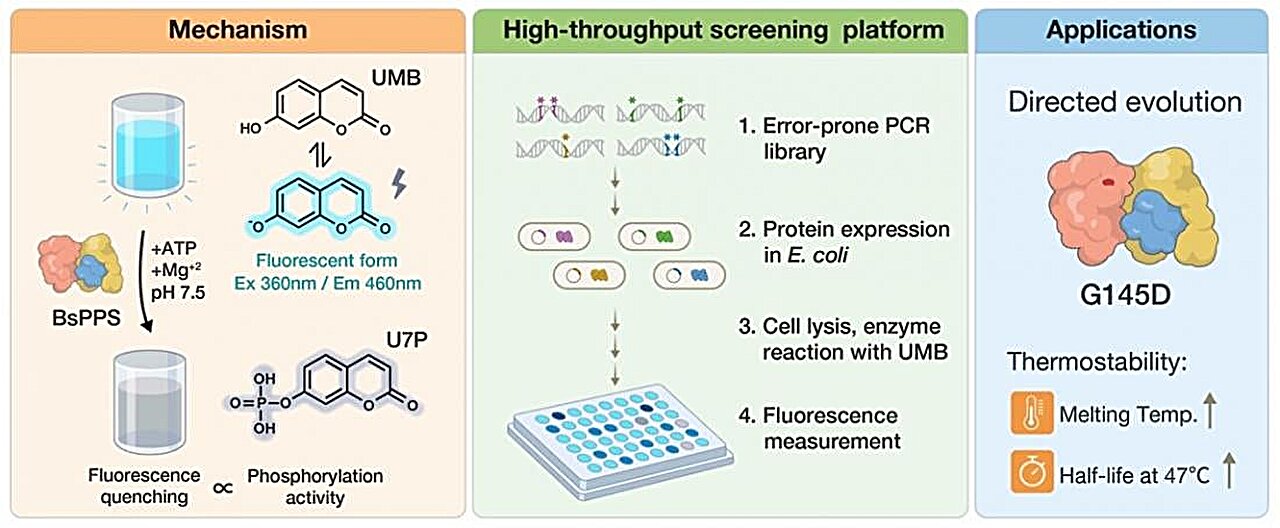
Conventional analytical methods like HPLC are too slow and labor-intensive for screening large numbers of samples. The new study developed a fluorescence-based screening method using umbelliferone as an indicator of enzyme activity.
Phosphate groups improve solubility
The enzyme BsPPS attaches phosphate groups to phenolic compounds to make them more water-soluble. This modification supports the development of improved nutraceuticals and related products with better absorption properties.
Study published in Food Chemistry
The research team discovered that umbelliferone normally produces a strong fluorescent signal before the enzyme acts on it. When BsPPS adds a phosphate group to the indicator, the signal changes to indicate activity.
Reported by one outlet
Only one outlet has published this. Nothing here has been checked against a second report, so read it as that outlet's account and follow the link below for the original.
Reported by
1 independent outlet. Headline as published. Links open the original report.