Kyoto University researchers propose sequential hardening strategy for stronger alloys
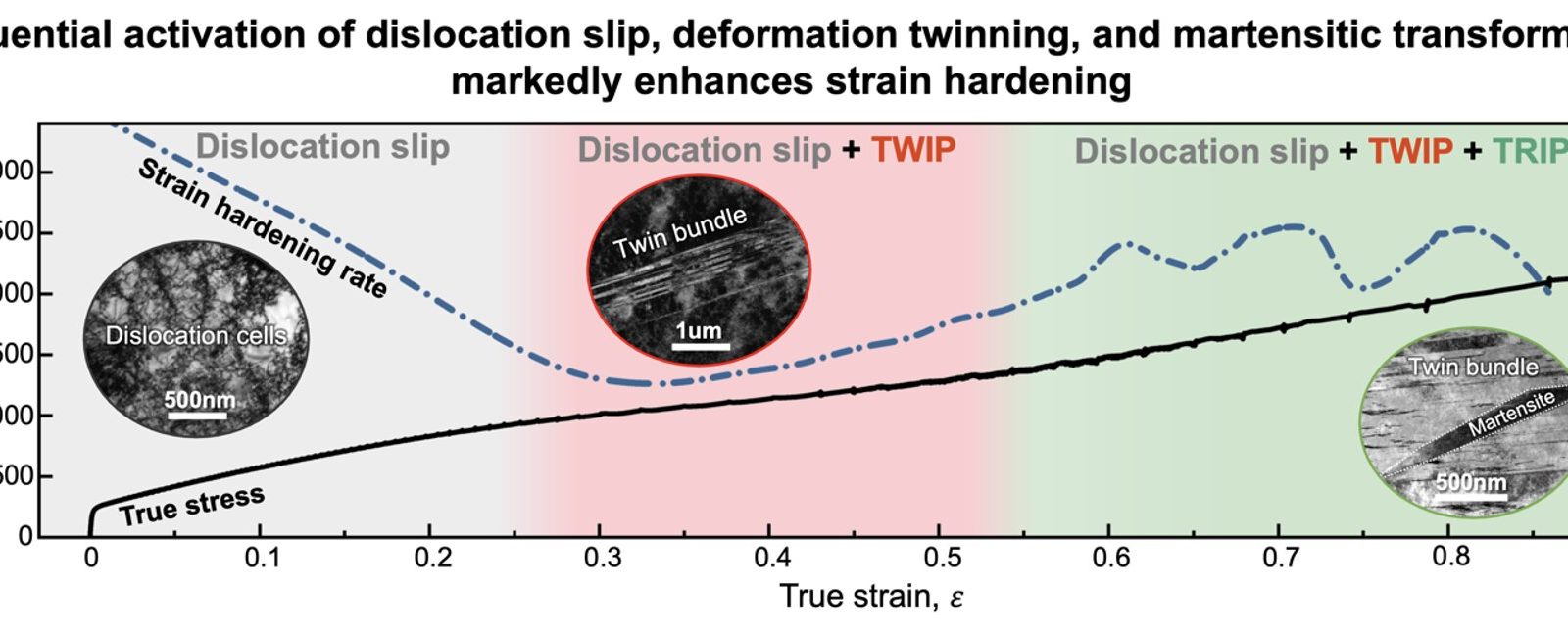
Researchers at Kyoto University have proposed a new alloy design strategy that activates different hardening mechanisms at different stages of deformation.
Challenge of combining strength and ductility
Structural metals used in engineering projects are expected to possess both high strength and high ductility. Achieving these properties simultaneously is challenging because strain hardening effectiveness usually decreases as deformation continues. Some advanced metals obtain additional hardening from deformation twinning or martensitic transformation, but these processes often compete with each other.
Sequential activation of mechanisms
A team at Kyoto University hypothesized that activating both mechanisms in the same material at different stages could allow them to provide strain hardening sequentially. This approach aims to avoid the competition that typically occurs when relying on just one or the other mechanism. The researchers proposed a strategy where differing mechanisms are activated in sequence rather than simultaneously.
Reported by one outlet
Only one outlet has published this. Nothing here has been checked against a second report, so read it as that outlet's account and follow the link below for the original.
Reported by
1 independent outlet. Headline as published. Links open the original report.