Geodesy researchers find double-digit percentage gaps between ocean warming data and climate models
University of Bonn geodesy researchers published new findings showing large differences between measured ocean warming and climate model calculations in the journal Earth System Science Data.
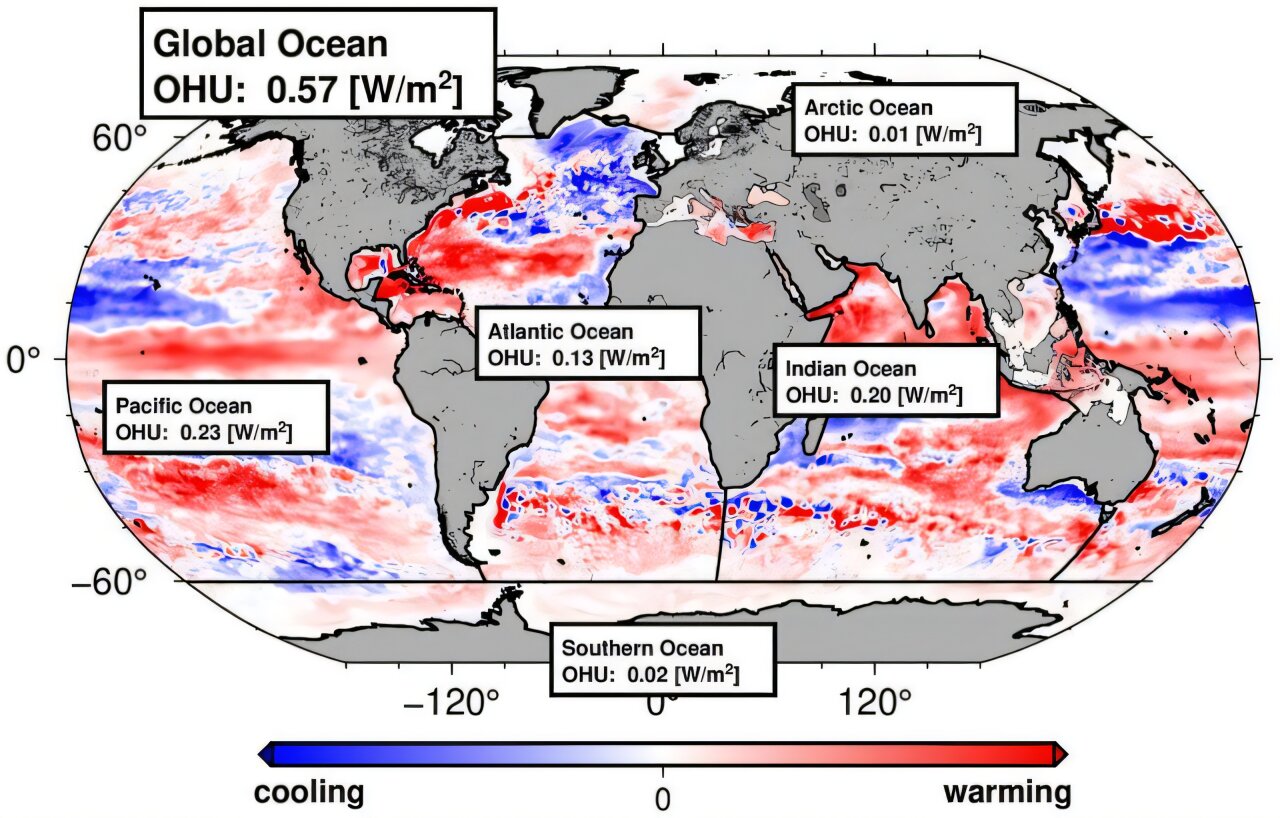
New method combines buoy and satellite data
Scientists at the University of Bonn combined measurements from freely drifting submersible buoys with sea level information gathered by satellites. This approach allows them to reconstruct monthly maps that determine warming across the entire ocean rather than just surface layers. Their technique directly calculates total warming averaged over all ocean depths to find global values.
Results show significant deviations from models
The analysis indicates that individual ocean basins display significant deviations when compared against standard model calculations. In some specific cases, these differences reached the double-digit percentage range according to the study authors. About ninety percent of the extra heat Earth absorbs currently goes into the oceans to drive these changes.
Findings influence sea level and weather
Understanding how much heat the ocean absorbs helps explain variations in sea levels and marine heat waves. The research also sheds light on weather phenomena such as El Niño patterns linked to ocean temperature shifts. These findings are important because the world is currently absorbing more heat than it radiates back into space.
Reported by one outlet
Only one outlet has published this. Nothing here has been checked against a second report, so read it as that outlet's account and follow the link below for the original.
Reported by
1 independent outlet. Headline as published. Links open the original report.