Atomic motion enables bulk photovoltaic effect in centrosymmetric crystals
Researchers at the Institute of Science Tokyo found that atomic motion allows the bulk photovoltaic effect to persist in a material with an average centrosymmetric crystal structure.
Study challenges conventional solar cell limits
The bulk photovoltaic effect normally requires noncentrosymmetric crystal structures to generate photocurrent without a p-n junction. A new study shows this effect can occur even when the material's average structure remains centrosymmetric. This discovery suggests a new strategy for enhancing photoelectric conversion beyond standard theoretical limits.
New material demonstrates room temperature operation
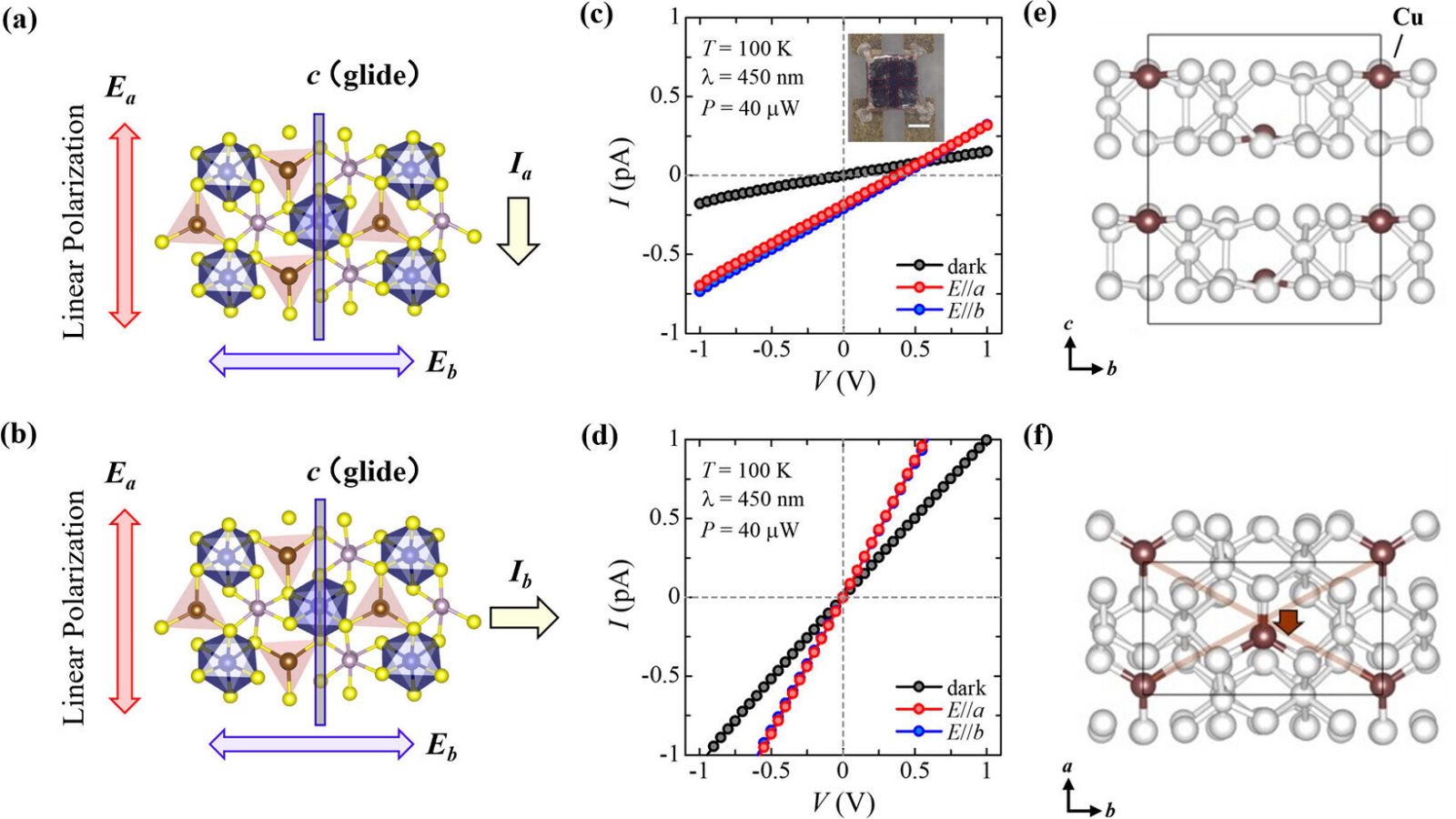
The team tested their findings on CuCrP2S6, a van der Waals material that transitions between different structural states. Photocurrent persisted at room temperature during the experiment led by Ryoga Murata and Takao Sasagawa. The results indicate that light can interact with the material to generate current without needing a junction.
Efficiency potential exceeds Shockley-Queisser limit
Conventional single-junction silicon solar cells face a fundamental efficiency limit of about 33 percent. The bulk photovoltaic effect offers an alternative method not subject to this specific constraint. Researchers believe this approach could help push solar cell performance past established boundaries.
Reported by one outlet
Only one outlet has published this. Nothing here has been checked against a second report, so read it as that outlet's account and follow the link below for the original.
Reported by
1 independent outlet. Headline as published. Links open the original report.