Argonne scientists use X-ray imaging to watch quantum defects form in silicon carbide
Researchers at the U.S. Department of Energy's Argonne National Laboratory developed a new X-ray technique to observe how silicon carbide responds to laser pulses in real time.
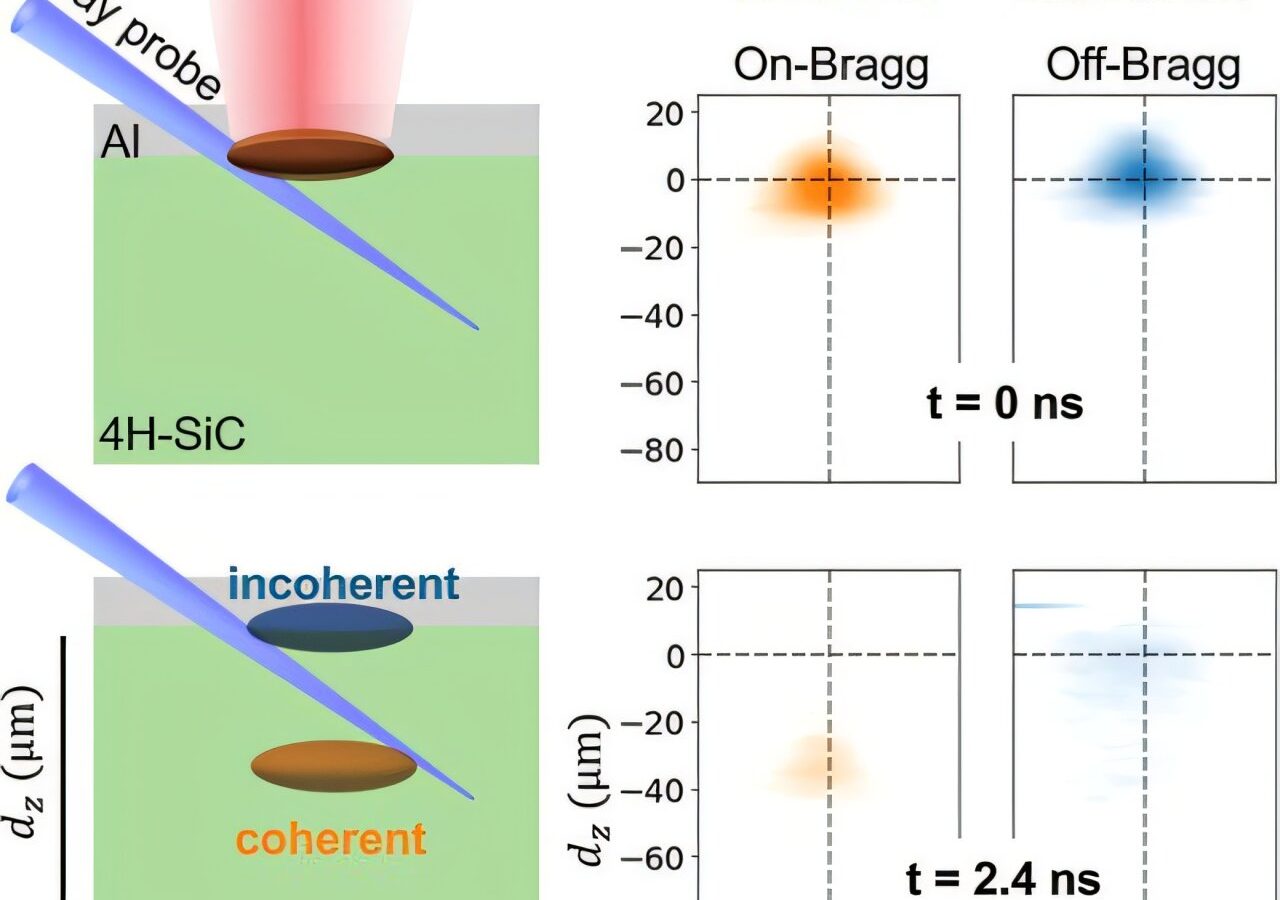
Creating vacancies with lasers
Scientists fire an ultrafast laser pulse into a material to knock atoms out of place. This process leaves behind tiny imperfections called vacancies that can behave as qubits. Researchers previously lacked a clear understanding of what happens inside the crystal during this instant.
Real-time three-dimensional imaging
The team used the Advanced Photon Source to capture images in three dimensions and real time. Their work provides pictures of how laser energy moves through the material immediately after impact. This approach helps scientists place quantum defects exactly where they need them.
Research published in ACS Nano
The findings appear in the journal ACS Nano according to the report from Phys.org. Argonne scientist Haidan Wen stated that understanding the laser's action is required before engineering defects precisely. The study marks an important step toward building quantum devices with atomic precision.
Reported by one outlet
Only one outlet has published this. Nothing here has been checked against a second report, so read it as that outlet's account and follow the link below for the original.
Reported by
1 independent outlet. Headline as published. Links open the original report.