COP31 negotiators debate loss and damage fund eligibility rules
Legal experts argue that country borders are poor guides for determining which communities qualify for the new Loss and Damage fund at COP31.
Legal experts argue that country borders are poor guides for determining which communities qualify for the new Loss and Damage fund at COP31.
CU Boulder physicists Donna dePolo and Shijie Zhong published a new 3D model on November 12 that details ground motions beneath melting West Antarctica.
Cognitive engineers report that employees now spend significant time checking generative AI responses for errors and biases in modern office workflows.
A team from Martin Luther University Halle-Wittenberg and the Max Planck Institute for Microstructure Physics discovered an unintended ferromagnetic interface layer that masks signals in Mn3Sn samples.
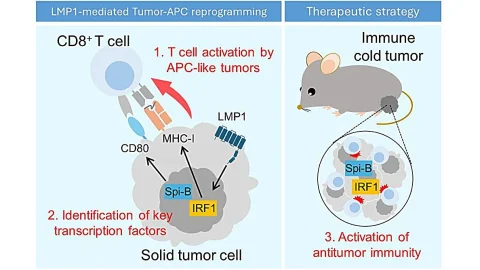
Researchers at Hiroshima University identified two transcription factors that replicate the antitumor benefits of an Epstein-Barr virus protein in mice.
Scientists explain that standard annual water-quality reports fail to list all detectable substances and emerging contaminants found in public drinking supplies.
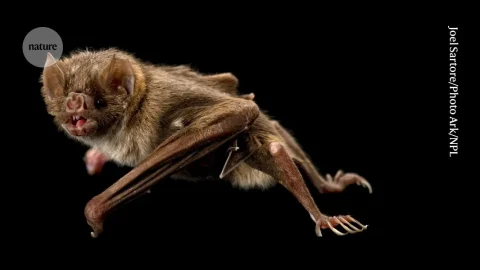
A new genomic analysis published on bioRxiv explains how three bat species digest blood and manage water after feeding.
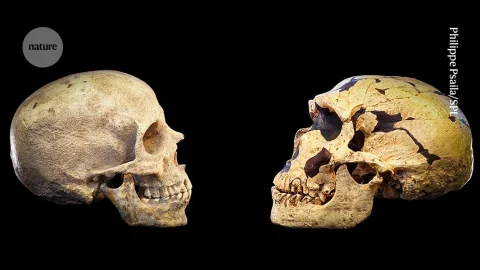
A genetic variant inherited from Neanderthals reduces the size of specific brain areas involved in visual processing in people with non-African ancestry.
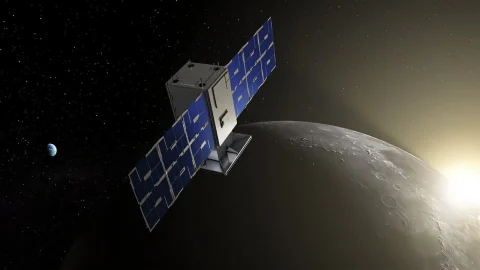
Researchers from Advanced Space and Texas A&M propose using solar panel eclipse data to navigate lunar orbits without radio signals.
Researchers at the University of Louisville published new findings in mBio showing human immune cells can engulf specific amoeba species.