Machine learning model identifies warning signs for sudden stratospheric warming events
Researchers published a study in the Journal of Geophysical Research on how machine learning can predict disruptions to the polar vortex.
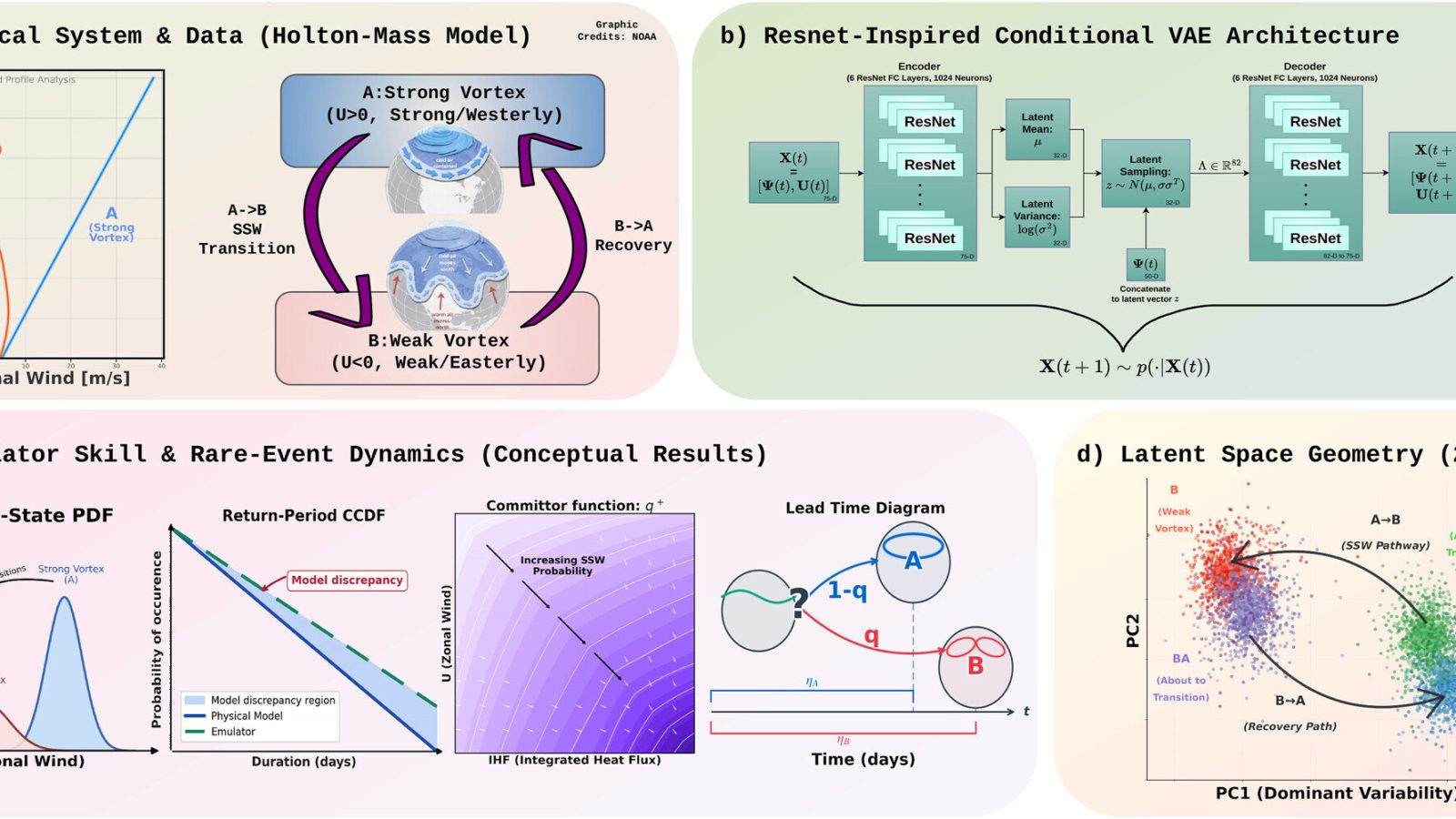
Model training and verification process
Scientists trained an artificial intelligence system using the Holton-Mass model of stratospheric variability. The team confirmed that their conditional variational autoencoder successfully reproduced both strong and weak polar vortex regimes. They then performed a principal component analysis to examine how the model represents these specific atmospheric features.
Discovery of interpretable clusters
The analysis revealed four physically interpretable clusters within the data structure. A transition from a strong regime to a weak one signals an imminent sudden stratospheric warming event. This shift causes the polar vortex to disrupt and unleash frigid air southward.
Potential for improved forecasting
Understanding these patterns allows researchers to accelerate simulations of the polar vortex. The new technique aims to solve the current difficulty in predicting when cold waves will penetrate farther than usual. Better prediction could help authorities warn people before temperatures drop precipitously across North America and Europe.
Reported by one outlet
Only one outlet has published this. Nothing here has been checked against a second report, so read it as that outlet's account and follow the link below for the original.
Reported by
1 independent outlet. Headline as published. Links open the original report.