Study finds judging strangers is easier when their tastes differ from our own
Researchers published a study in Royal Society Open Science on October 16, 2026, suggesting people accurately judge strangers whose preferences are less like their own.
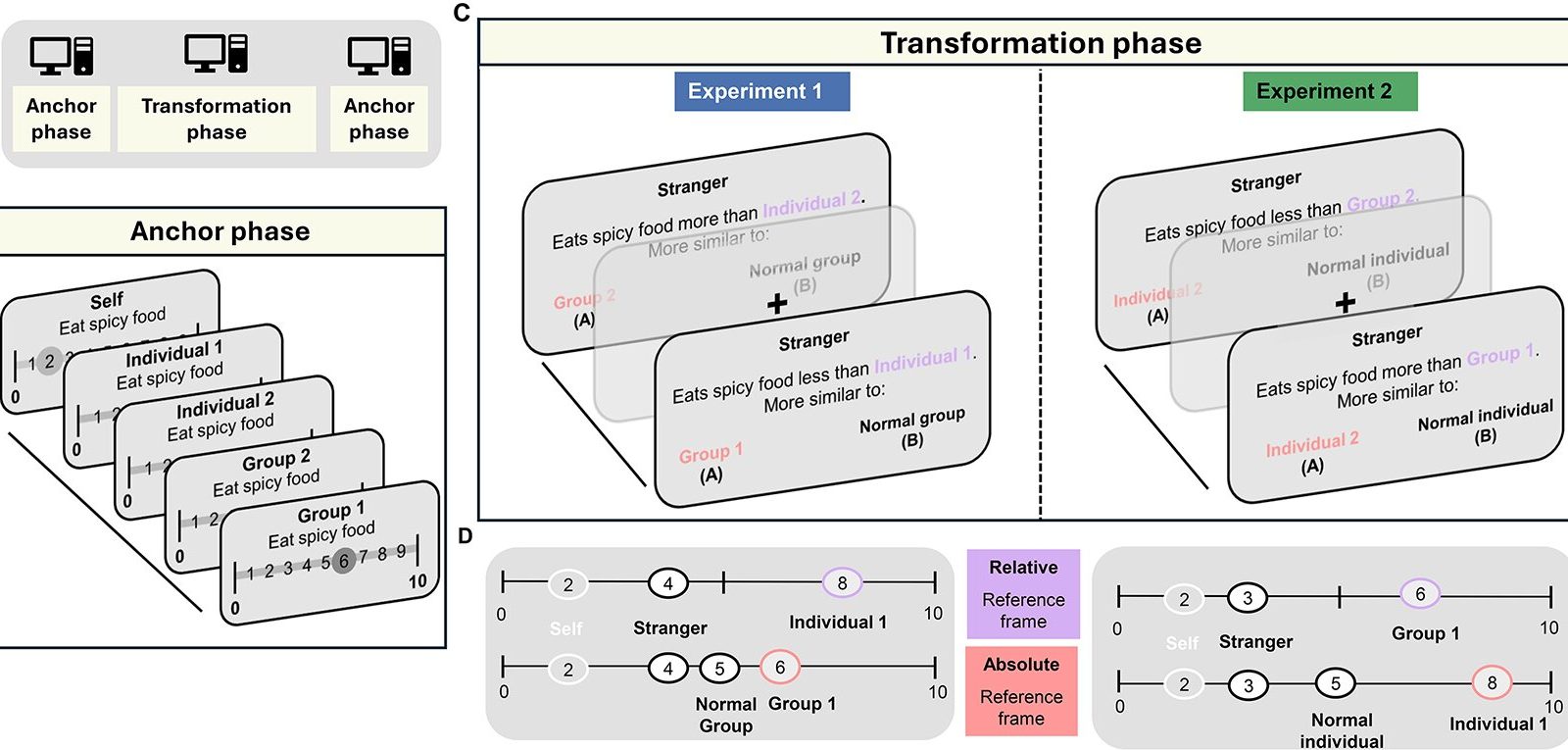
Egocentric anchoring explains the bias
Humans often use their own beliefs as a mental starting point to predict what others think. This cognitive bias is known as egocentric anchoring and helps people understand relationships between individuals. The tendency to start from self-preferences persists even when groups act as comparison points.
Accuracy increases with preference distance
Participants in the new research were more accurate when a stranger's inferred preferences differed significantly from their own. This finding contradicts the usual assumption that similarity improves judgment accuracy. The study suggests distance on a social map relates to how similar preferences rank.
Self-preferences create a social map
Using self-preferences allows the mind to build a social map similar to a geographical map. People adjust away from their own starting point to understand where others fit in that map. Someone who enjoys an activity more than one person but less than another places those people on opposite sides of the self.
Reported by one outlet
Only one outlet has published this. Nothing here has been checked against a second report, so read it as that outlet's account and follow the link below for the original.
Reported by
1 independent outlet. Headline as published. Links open the original report.