Scientists create reusable molecular fabric to separate industrial chemicals
Researchers from UT Austin and Zhejiang University published a study in Nature describing a new reusable molecular fabric that separates toxic benzene from cyclohexane.
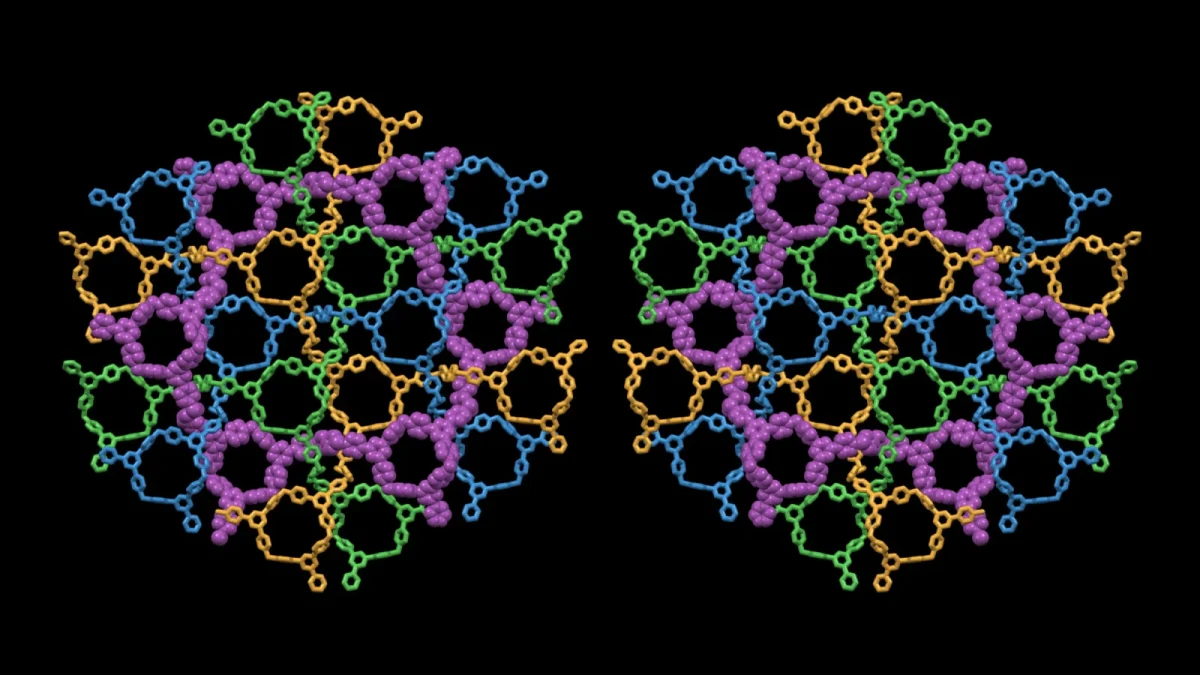
New filter solves separation challenge
Separating toxic chemicals from industrial processes like nylon manufacturing requires significant energy and effort. A team of scientists developed a solution using a molecularly woven fabric to filter mixtures. Jonathan Sessler, a UT chemist, stated that huge amounts of energy currently go into chemical separation. The researchers address this efficiency challenge by applying the ancient principle of weaving at a molecular level.
Fabric uses chirality and stacking
Chemical plants traditionally use distillation to separate cyclohexane from benzene based on different boiling points. However, these two chemicals have nearly identical boiling points and tend to vaporize together during the process. This novel textile is made up of four molecular networks weaving together in an interlocking design, positioned both above and below one another. Layers are stacked alternating between regular orientation and mirror-image orientation to create a springy thick filter.
Material absorbs most benzene
This self-assembling fabric allows molecular networks to arrange and interconnect on their own based on underlying chemistry. After pouring a benzene-containing mixture onto the material, scientists can heat it to vaporize the benzene. The reusable fabric then absorbs 97.9 percent of the benzene before being used again. This method avoids the expensive additives typically required for traditional distillation-based separations.
Reported by one outlet
Only one outlet has published this. Nothing here has been checked against a second report, so read it as that outlet's account and follow the link below for the original.
Reported by
1 independent outlet. Headline as published. Links open the original report.