Satellite data show dryland vegetation instability rising over four decades
University of Arizona researchers analyzed forty years of satellite records to reveal increasing volatility in global dryland ecosystems.
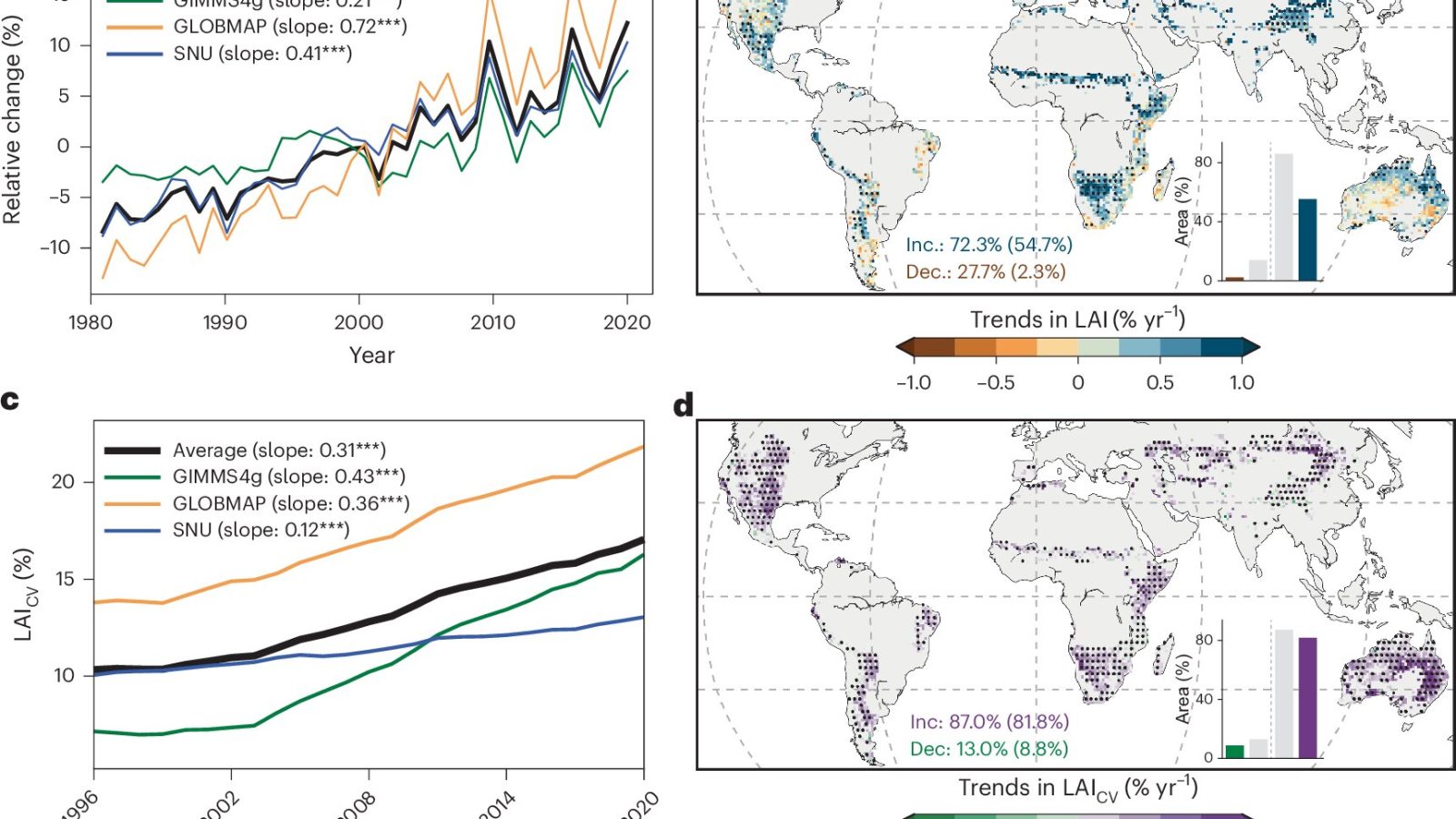
Carbon dioxide drives wet year growth
Rising atmospheric carbon dioxide levels have stimulated plant growth during wet periods. This stimulation created a persistent greening trend across the planet over time.
Dry years expose hidden ecosystem swings
The study found that this trend masks severe year-to-year swings in vegetation activity. Such volatility leaves ecosystems especially vulnerable when rainfall is low.
Most drylands face escalating instability
Roughly 80 percent of global drylands are experiencing this increasing instability according to the findings. Major global vegetation models currently overestimate how stable these regions remain.
Reported by one outlet
Only one outlet has published this. Nothing here has been checked against a second report, so read it as that outlet's account and follow the link below for the original.
Reported by
1 independent outlet. Headline as published. Links open the original report.