Rising seas could create new habitats for 122 invasive marine species by 2100
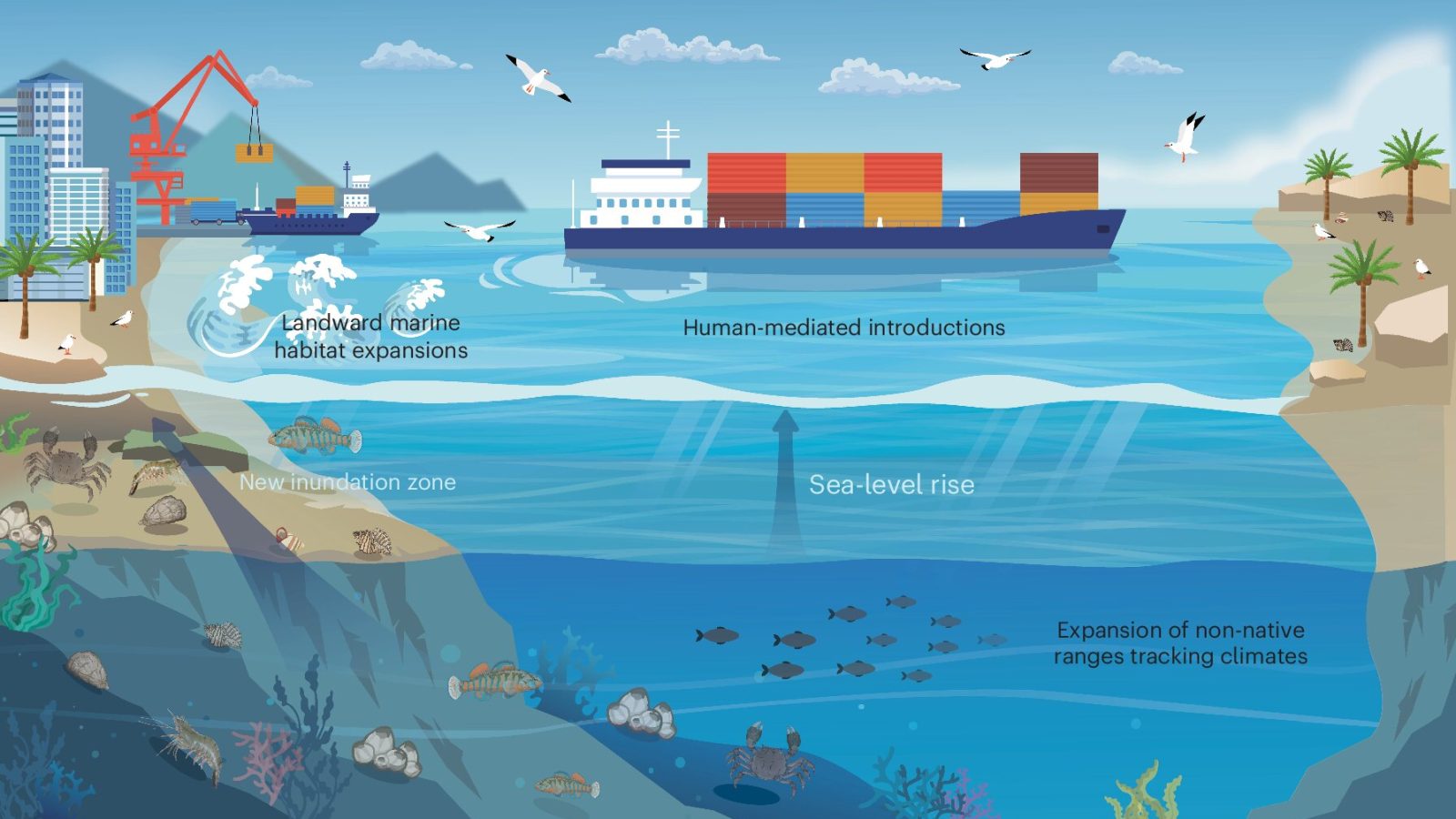
A study published in Nature Ecology & Evolution projects that rising global sea levels will flood coastal areas suitable for over a hundred non-native marine animals by the end of this century.
At-risk regions identified globally
Researchers found that more than two-thirds of newly flooded coastlines worldwide could support these species. High-risk areas include the eastern United States, the Gulf of Mexico, and northern Australia. The analysis specifically looked at how climate change scenarios alter species distributions in estuaries.
Projected sea level rise
Under a moderate emissions scenario, global median sea levels are expected to reach 20 cm by 2050. By the year 2100, that figure rises to 56 cm according to the models used. These changes will expand the land area available for established non-native marine animal populations.
Scope of species list
The team modeled future distributions for 122 established non-native marine animals including Atlantic blue crabs and European green crabs. This group also contains Chinese mitten crabs, Pacific oysters, and Asian tiger shrimp. Such biological invasions are recognized as a major cause of biodiversity loss.
Reported by one outlet
Only one outlet has published this. Nothing here has been checked against a second report, so read it as that outlet's account and follow the link below for the original.
Reported by
1 independent outlet. Headline as published. Links open the original report.