Researchers document daily carbon cycle in Mojave Desert minerals
UC Berkeley scientists published a study on September 23 describing a daily carbon dioxide exchange process found in Mojave Desert soil minerals.
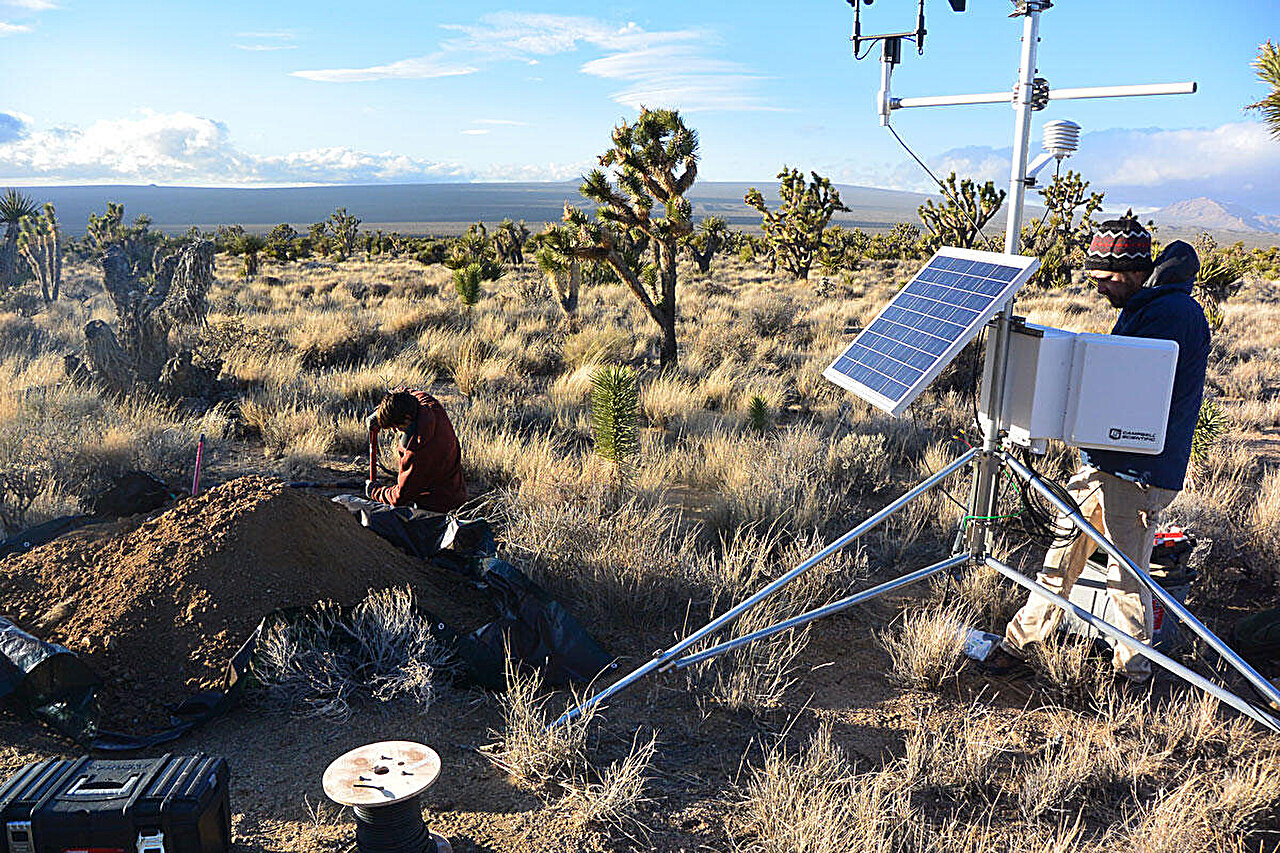
Nighttime adsorption and daytime release
At night, falling temperatures cause atmospheric carbon dioxide molecules to attach to minerals in the desert soil. When sunlight returns and heat rises, those molecules detach from the ground and return to the air as gas. This process occurs independently of plant activity or root systems.
Study details and publication source
The research team from UC Berkeley's Department of Environmental Science, Policy, and Management presented their findings in the journal Science Advances. Lead author Anna Abramova noted that this mechanism provides a different explanation for soil carbon exchange than previously understood models. The study focuses on how fine particles in arid environments manage carbon storage without vegetation.
Reported by one outlet
Only one outlet has published this. Nothing here has been checked against a second report, so read it as that outlet's account and follow the link below for the original.
Reported by
1 independent outlet. Headline as published. Links open the original report.