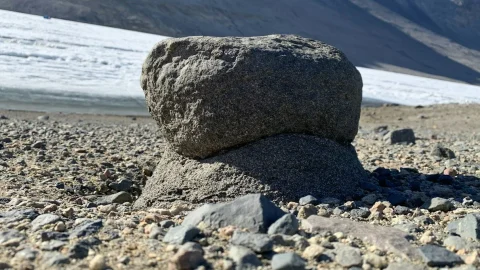
Antarctic footprints disturb rare microbial ecosystems in Dry Valleys
A new study finds that human footprints in Antarctica's McMurdo Dry Valleys can redistribute local microbes and damage fragile microscopic ecosystems.
A new study finds that human footprints in Antarctica's McMurdo Dry Valleys can redistribute local microbes and damage fragile microscopic ecosystems.
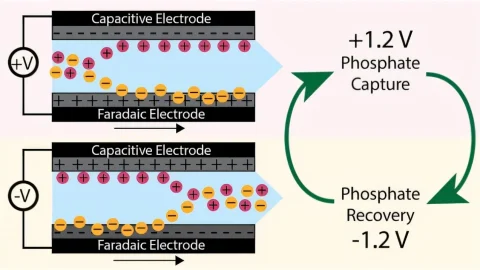
Northwestern University and Argonne National Laboratory scientists published a study on November 18 describing an electrified fabric that captures phosphate from water.
Volunteers at Gurdwara Guru Nanaksar in Chapin, South Carolina, serve a free communal meal on Nov. 24 to mark the birth of Sikh founder Guru Nanak.
Researchers at the University of Osaka demonstrated a method to repeatedly switch molecular states within tens of nanometers using plasmon nanofocusing.
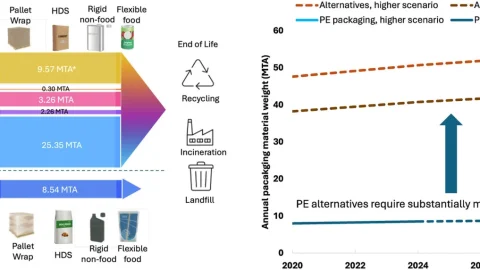
Researchers from the US and Austria published a life cycle assessment comparing polyethylene packaging to paper, glass, and metal options in the US and Europe.
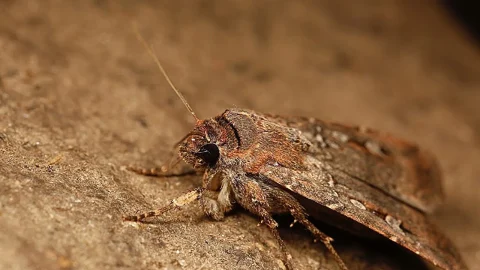
Researchers from Lund University and partners published a study in Nature showing that Australian bogong moths navigate using Earth's magnetic field alongside stars.
Scientists at the Technical University of Denmark have fabricated ultrathin crystal sheets that form a controllable square lattice of defects when bonded and twisted.
A team from Université de Montréal and Griffith University analyzed Canadian court cases to reveal how promoters orchestrate elaborate charitable donation frauds between 2000 and 2023.
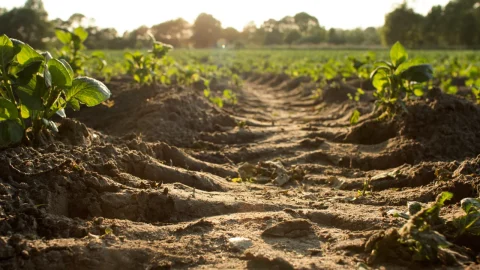
Researchers from the Institute of Applied Ecology published a review on stable nitrogen isotope techniques for tracing gaseous nitrogen production in soils on October 9.
University of Sydney researchers argue that reliable metrics are essential to prevent the 2022 Global Biodiversity Framework from failing.