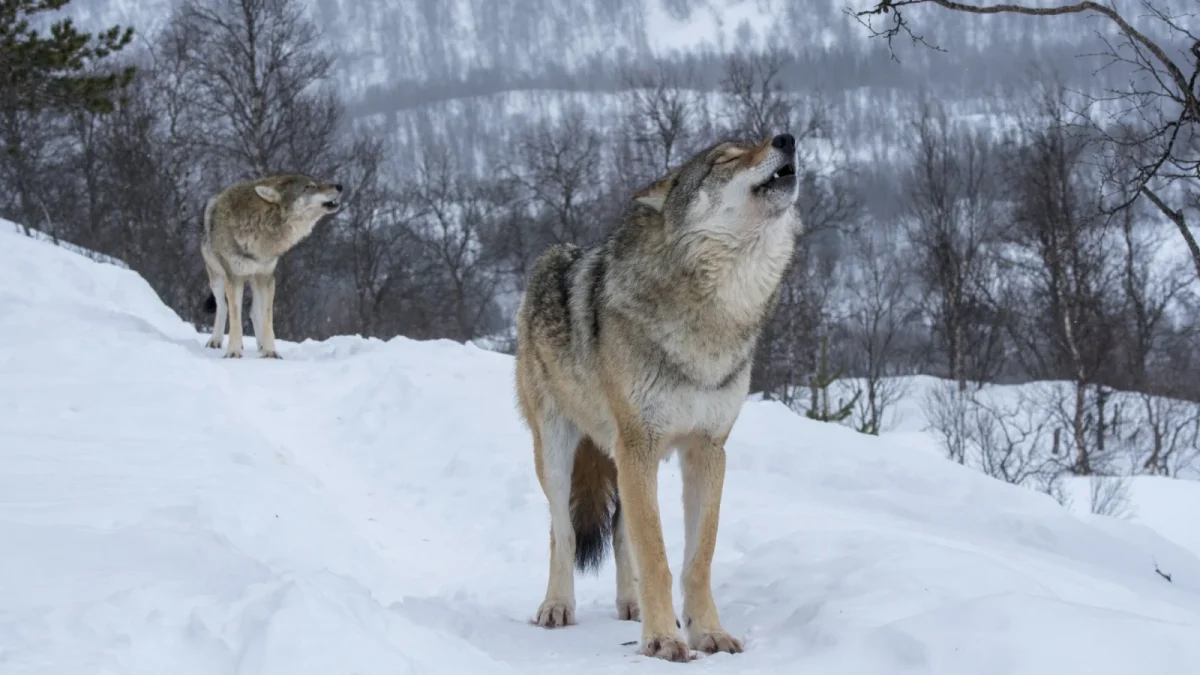
Wolves howl to maintain social networks and locate pack members
Experts explain that wolf howling behavior serves specific social functions rather than being triggered by the sight of the moon.
Reasons for vocal communication
A lone wolf howls when separated from its pack to regain contact with group members. Arik Kershenbaum, a zoologist at the University of Cambridge, stated that dispersed packs need this method to coordinate hunting or care for pups. When territory is threatened by other wolves, the sound helps them return to each other quickly. Lone wolves may also howl to find a new pack or mate to join their group.
Group dynamics and territory
According to Tamás Faragó, data indicates that packs howl more frequently within the heart of their territory. He noted they increase howling when pups are around or when a carcass from a hunt is present. Loud group howling advertises a pack's location, which repels neighboring groups. Most chorus howling is social because it builds technical social cohesion and makes wolves feel safe.
Response patterns and range
Upon hearing a howl, each lone wolf shows a marked inclination to answer right away. However, if a lone wolf wanders into neighbor territory while they hear a pack howling, they will not respond. That silence makes it obvious that the intruder is there rather than a pack member. According to the Wolf Conservation Center, the howl carries for as far as 10 miles across open terrain.
Reported by one outlet
Only one outlet has published this. Nothing here has been checked against a second report, so read it as that outlet's account and follow the link below for the original.
Reported by
1 independent outlet. Headline as published. Links open the original report.