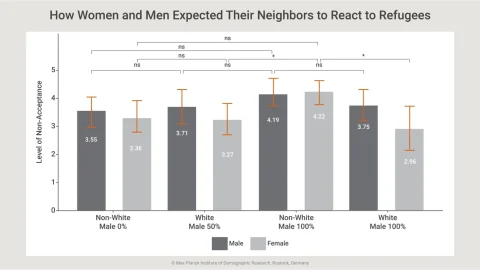
Study finds refugee reception expectations vary by group composition in eastern Germany
Researchers in Mecklenburg-Western Pomerania found that local acceptance of refugees depends on the gender and racial makeup of hypothetical arrival groups.
Researchers in Mecklenburg-Western Pomerania found that local acceptance of refugees depends on the gender and racial makeup of hypothetical arrival groups.
Researchers at the FAMU-FSU College of Engineering developed a hydrogel system that controls particle release to aid recovery in injured spinal cord cells within a laboratory setting.
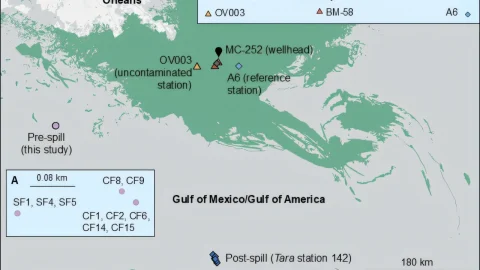
A biologist tested frozen seawater collected a year before the Deepwater Horizon disaster and found rare oil-eating bacteria were absent until the spill occurred.
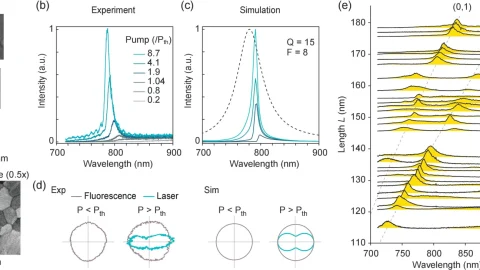
Researchers from Rice University and Harvard Medical School developed a nanolaser measuring 115 nanometers to track biological structures at the nanoscale.
Harvard researchers led by Richard Liu demonstrated a new method using repurposed battery materials to drive chemical reactions at the oil-water boundary.
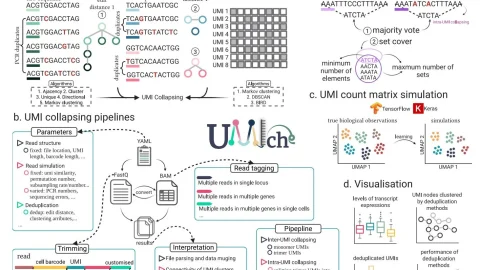
University of Oxford scientists have released an open-source tool called UMIche to improve molecular counting accuracy in RNA-sequencing studies published in Nature Communications.
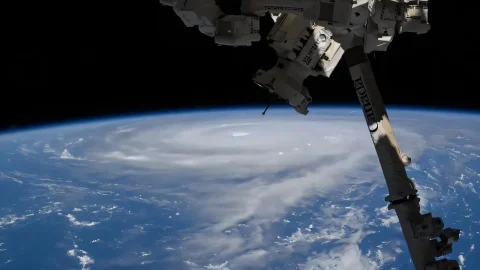
Researchers published findings in AGU Advances showing how rapid-scan Fengyun-4B satellite data help predict short-term changes in tropical cyclone strength.
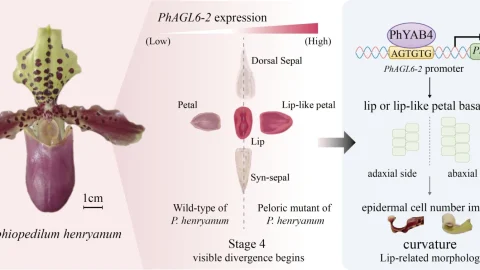
A research team from the South China Botanical Garden published findings on Nov. 6 regarding a molecular mechanism for curved floral organs in slipper orchids.
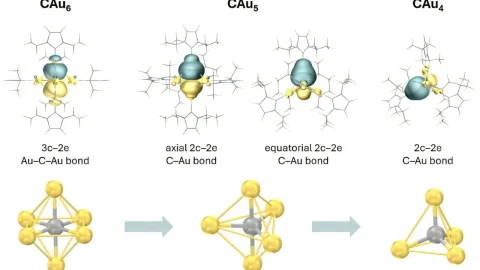
A team from Tokyo University of Science and Fuzhou University published findings on carbon-gold cluster bonding in the journal JACS Au.
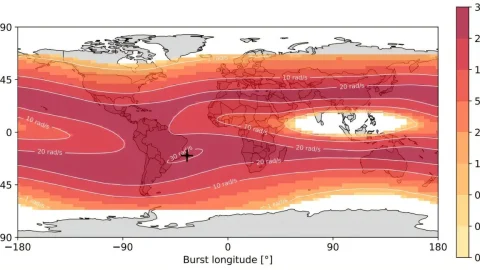
Researchers at the University of Wisconsin, Madison report that one megaton explosion above the South Atlantic Ocean could cripple nearly all satellites in low Earth orbit by November 17, 2026.