New mineral method removes over 99 percent radioactive technetium from liquid waste
Researchers at The University of Manchester published new studies in Environmental Science & Technology on converting radioactive technetium into stable minerals.
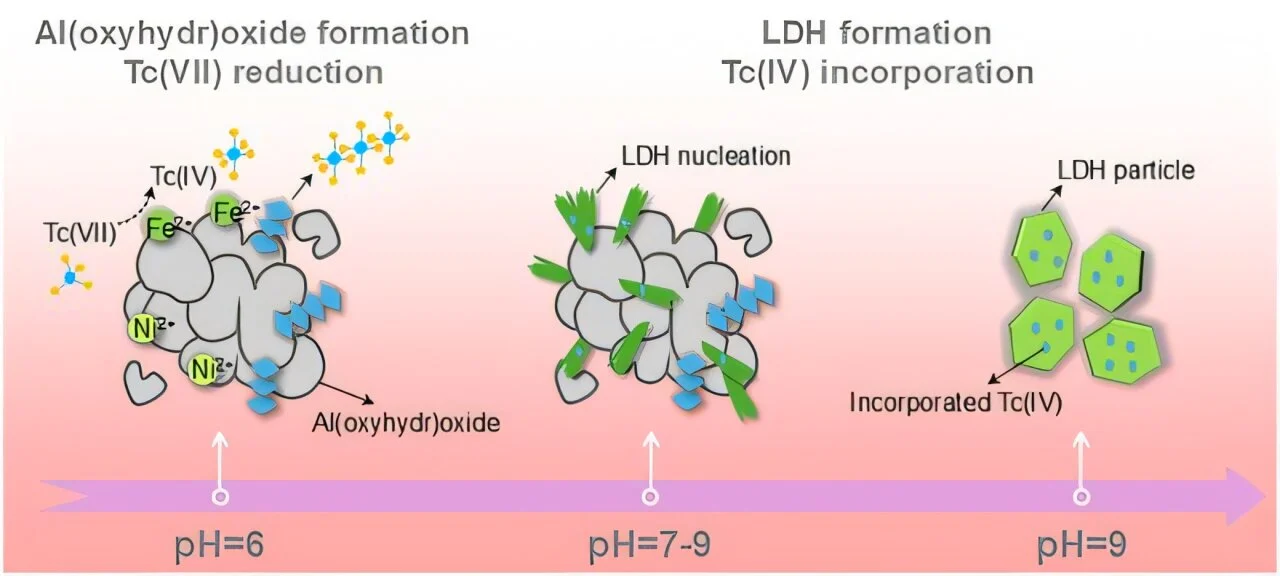
Technique locks contaminant into engineered minerals
Scientists developed a process that incorporates dissolved technetium from liquid waste streams into layered double hydroxides. This class of engineered mineral transforms the radioactive element into a less mobile chemical form during formation. The resulting solid structure prevents the contaminant from moving through soil or water.
Removal efficiency exceeds previous standards
Testing showed that the method successfully extracted more than 99 percent of the radioactive byproduct from the solution. This high level of removal addresses concerns about technetium-99 acting as a priority contaminant at legacy nuclear sites. The approach offers new strategies for treating effluents and remediating groundwater at locations like Sellafield.
Findings guide future disposal plans
The results will help inform long-term waste management strategies for nuclear fuel reprocessing facilities. Developing these durable waste forms aims to reduce environmental risks associated with radioactive byproducts. Future projects may use this technique to create safer storage solutions for contaminated materials.
Reported by one outlet
Only one outlet has published this. Nothing here has been checked against a second report, so read it as that outlet's account and follow the link below for the original.
Reported by
1 independent outlet. Headline as published. Links open the original report.