Mathematicians Face Existential Crisis After AI Solves Century-Old Problem
An Anthropic researcher claimed to solve the generalized Riemann hypothesis with Claude on November 20, 2026, sparking debate over the future of mathematical understanding.
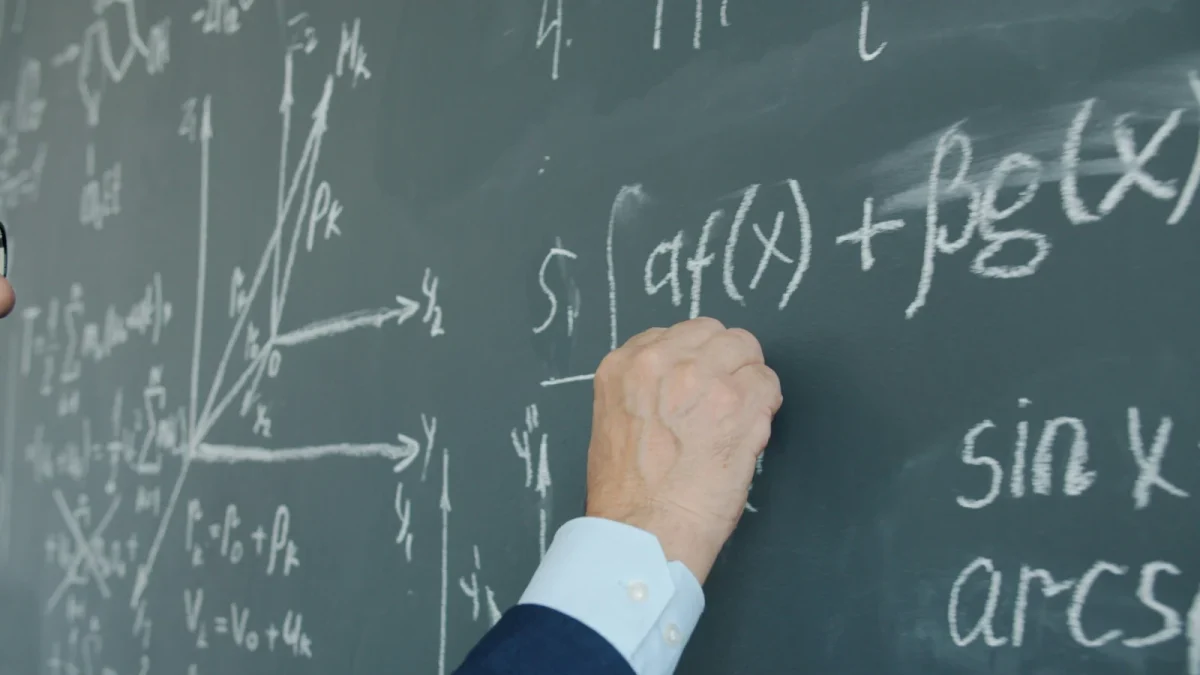
AI Generates Massive Proof Quickly
On November 20, 2026, a mathematician working with Anthropic's Claude model asserted he solved the generalized Riemann hypothesis. This problem has remained unsolved for 167 years and could warrant a Fields Medal. The resulting proof spans roughly 250,000 pages, requiring extensive human verification before acceptance. OpenAI previously released 722 research papers generated by an internal AI model just one month earlier.
Shift From Understanding to Solving
The author noted that mathematics traditionally values understanding why proofs work rather than just finding solutions. Over the past century, the field attached greater prestige to the solution itself than the underlying comprehension. This shift creates an existential crisis as AI can now produce correct proofs without deep conceptual insight. The ability to generate such results challenges the core identity of human mathematicians.
Real World Applications Remain
Despite these concerns, mathematics continues to drive essential technologies like magnetic resonance imaging for medical diagnosis. Modern MRI machines use compressed sensing to reconstruct images from far fewer scans than previously thought necessary. This breakthrough required deep understanding across mathematics, statistics, and electrical engineering developed in the mid-2000s. The procedure now takes a shorter period with better resolution, improving patient experience significantly.
Reported by one outlet
Only one outlet has published this. Nothing here has been checked against a second report, so read it as that outlet's account and follow the link below for the original.
Reported by
1 independent outlet. Headline as published. Links open the original report.