Lawrence Livermore scientists measure extreme pressure temperatures
Scientists at Lawrence Livermore National Laboratory used X-ray techniques to measure temperatures in tantalum compressed at the National Ignition Facility.
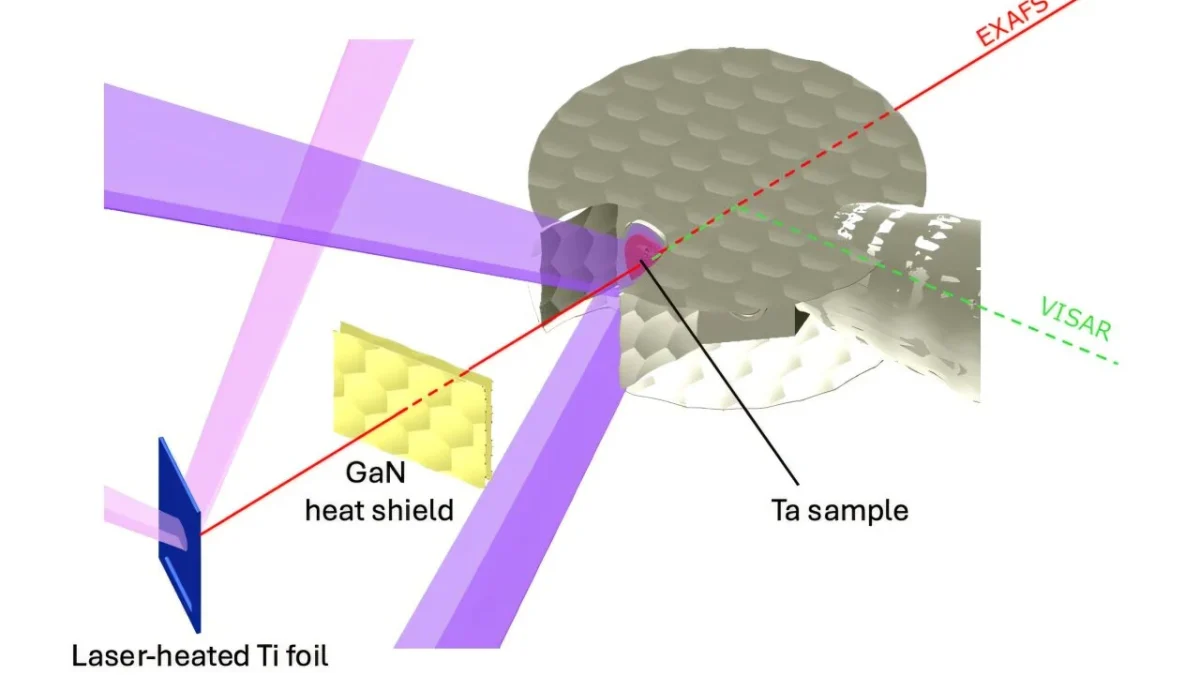
New method for heavy elements
Researchers at LLNL advanced temperature measurements for materials under extreme pressure using X-ray diffraction and extended X-ray absorption fine structure. They compressed tantalum to pressures exceeding 500 gigapascals while monitoring its crystal structure and thermal state. This approach allows tracking subtle changes in X-ray absorption to reveal distances between neighboring atoms. The technique works well because it captures necessary information in a single experiment suitable for brief conditions.
Strength affects heating calculations
At approximately 200 gigapascals, measured temperatures matched computer models only when accounts included the metal's resistance to compression. Some energy used to compress the material converts into additional heat that earlier models missed. Because tantalum quickly heats up and strongly takes in X-rays, it presents a difficult challenge for this experimental method. The study confirms tantalum retains its basic crystal structure under roughly 5 million times atmospheric pressure.
Better predictions for security
Physicist Andrew Krygier led the research team that published findings in Physical Review B regarding these extreme conditions. Understanding how materials respond helps identify sources of heating and improves ability to predict material behavior accurately. These experiments provide new ways to test models relevant to national security and high-energy-density physics applications.
Reported by one outlet
Only one outlet has published this. Nothing here has been checked against a second report, so read it as that outlet's account and follow the link below for the original.
Reported by
1 independent outlet. Headline as published. Links open the original report.