Astronomers find distant galaxy cluster suggests self-interacting dark matter
Scientists studying a massive galaxy cluster seven billion light-years away propose that self-interacting dark matter explains its unusual early formation.
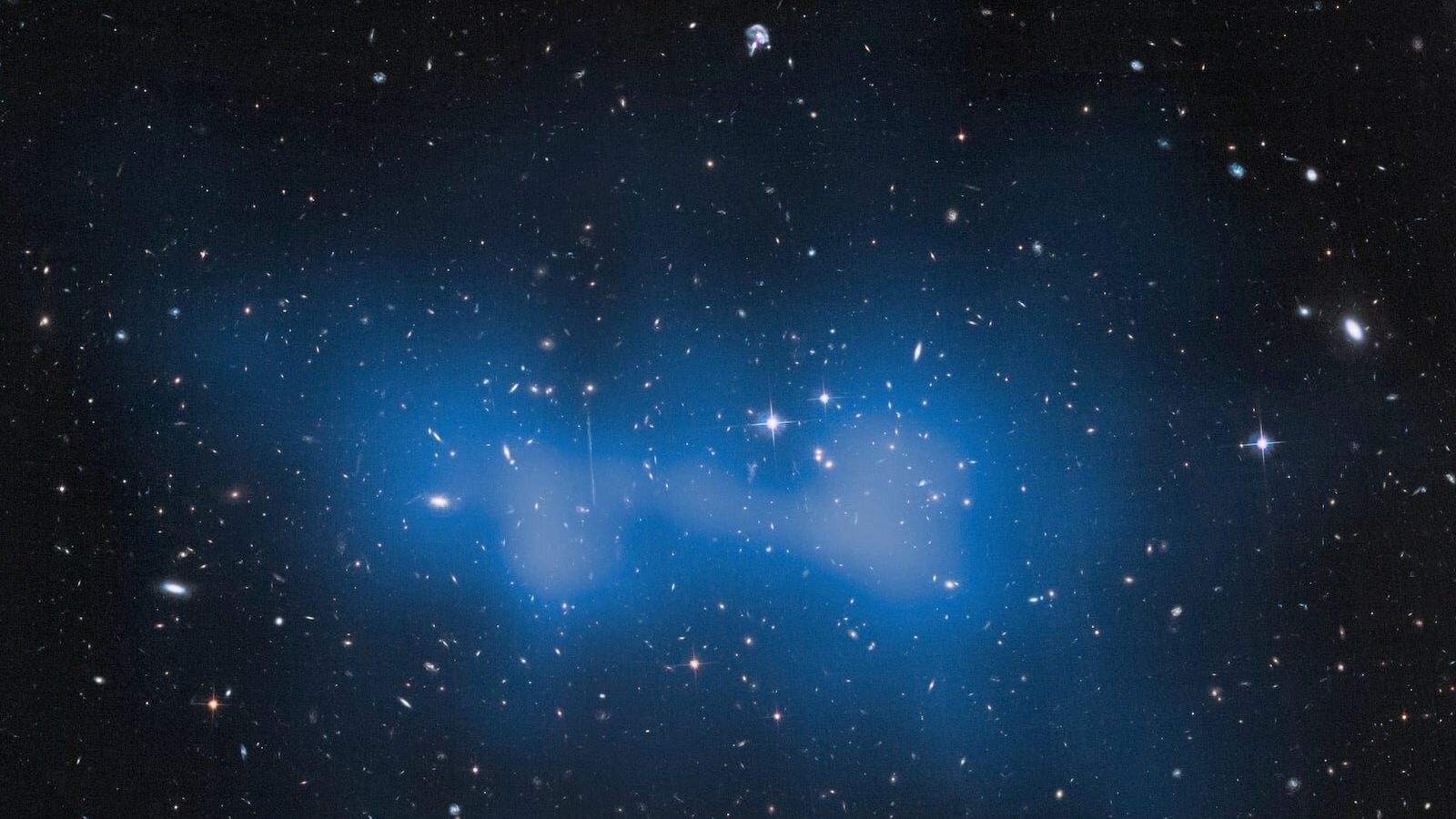
Unusual mass and collision
The object known as El Gordo contains more than two quadrillion solar masses. It features two distinct regions currently colliding with one another. This structure is exceptionally large for its specific era in cosmic history.
Challenge to standard models
Some researchers view this formation as a counterexample to the standard cosmological model. Standard cold dark matter theories struggle to explain such rapid growth. The cluster appears too big to form quickly under current inflationary universe assumptions.
New dark matter theory
A new study suggests self-interacting dark matter could resolve this discrepancy. In this view, dark matter particles collide with each other frequently. Such interactions would allow the supercluster to assemble so early in the universe.
Reported by one outlet
Only one outlet has published this. Nothing here has been checked against a second report, so read it as that outlet's account and follow the link below for the original.
Reported by
1 independent outlet. Headline as published. Links open the original report.