RIT Researchers Propose Liquid Crystal Sails for Spacecraft
Researchers at the Rochester Institute of Technology have proposed using liquid crystal sails to steer spacecraft sideways while facing the sun directly.
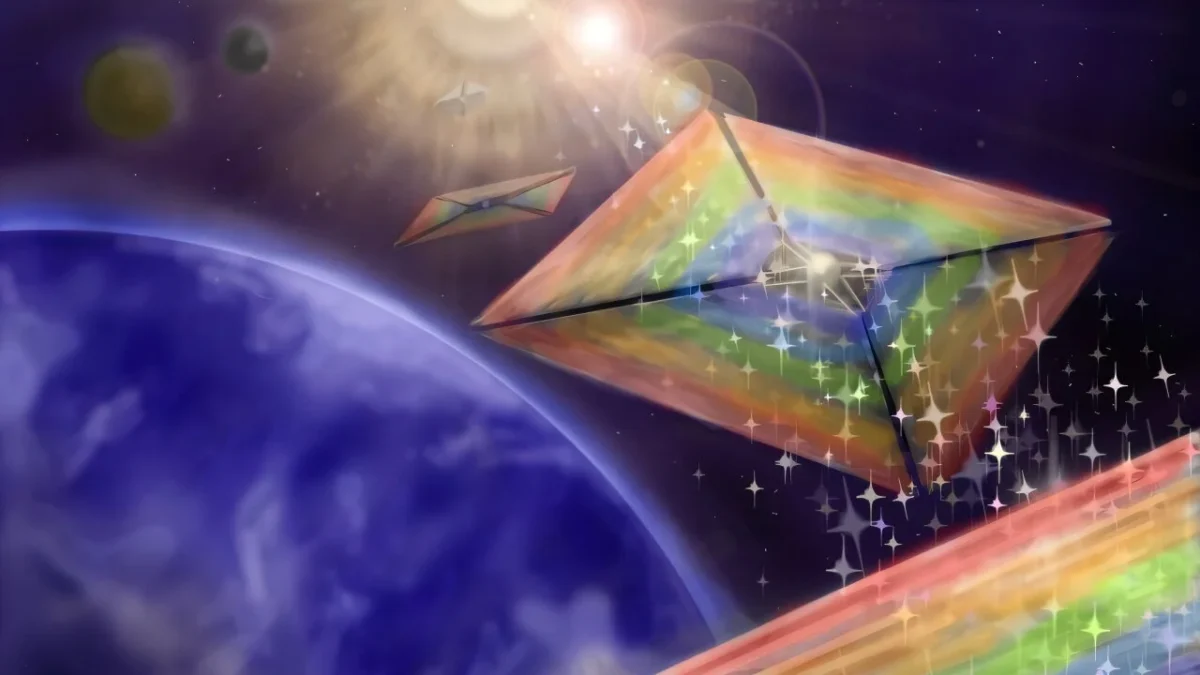
New Sail Design Uses Light Bending
A new paper from the Rochester Institute of Technology describes a technique that allows giant sails to steer sideways. The team uses liquid crystals instead of traditional mirrors to bend sunlight at steep angles via diffraction. This method lets the spacecraft turn without tilting its surface relative to the sun. Grover Swartzlander Jr., a professor at RIT, realized microscopic optical patterns could replace mechanical tilting nearly a decade ago.
Flexible Materials Solve Scaling Issues
Early prototypes focused on metal-coated films but were difficult to scale up for rockets. The new study draws technical input from BEAM engineering and Johns Hopkins Applied Physics Laboratory. Flexible plastics contain rod-shaped molecules that twist into microscopic spirals to create layers of differing refractive indices. These materials bend light using the Pancharatnam phase phenomenon while remaining lightweight and easy to manufacture at scale.
Solar Sailing Gains New Feasibility
Traditional solar sails face control problems similar to holding an umbrella against a stiff breeze. Tilting the surface lowers total wind impact and makes control harder in space. The new diffractive sail pushes light to one side to provide an equal kick in the opposite direction. This approach offers advantages over traditional designs by allowing sideways steering while keeping the sun directly ahead.
Reported by one outlet
Only one outlet has published this. Nothing here has been checked against a second report, so read it as that outlet's account and follow the link below for the original.
Reported by
1 independent outlet. Headline as published. Links open the original report.