Researchers in South Korea use dichloromethane to make amide bonds
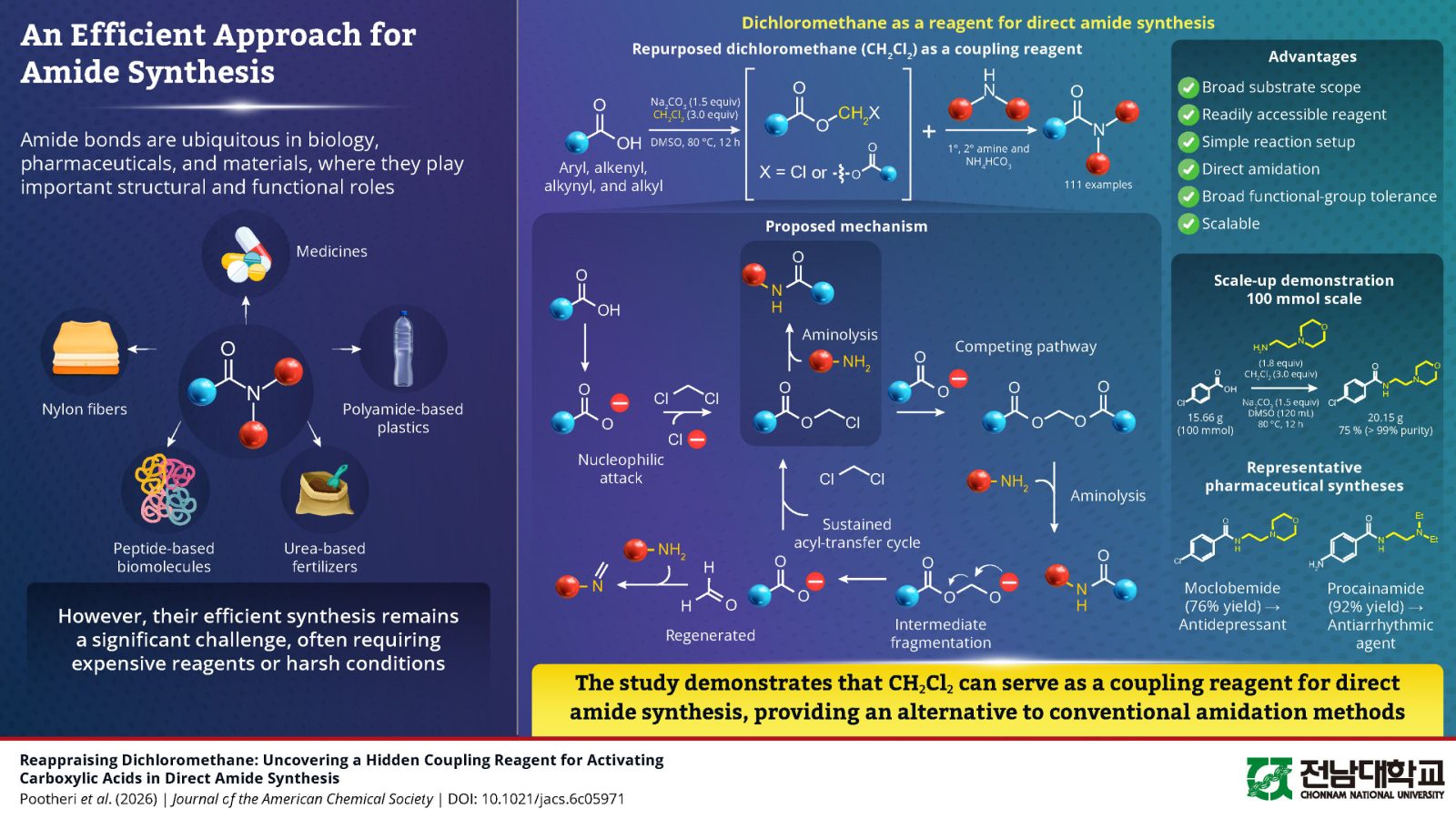
A team at Chonnam National University in South Korea published a study showing how the common solvent dichloromethane can act as a coupling reagent for efficient amide synthesis.
New method replaces toxic reagents
Most practical approaches to making amide bonds require coupling reagents that are often corrosive or toxic. The new study presents the successful application of dichloromethane to facilitate efficient and scalable amide bond formation. This solvent is already widely used in many chemical processes.
Study published in chemistry journal
The research team led by Sunwoo Lee found that this common solvent enables direct synthesis from carboxylic acids and amines. Their findings were published in the Journal of the American Chemical Society. The approach aims to solve challenges related to hazardous byproducts and waste generation.
Reported by one outlet
Only one outlet has published this. Nothing here has been checked against a second report, so read it as that outlet's account and follow the link below for the original.
Reported by
1 independent outlet. Headline as published. Links open the original report.