Researchers find Tris buffer protects mRNA nanoparticles from freezing damage
Scientists at The University of Texas at Austin and Eli Lilly studied how storage buffers affect the stability of mRNA lipid nanoparticles after freezing.
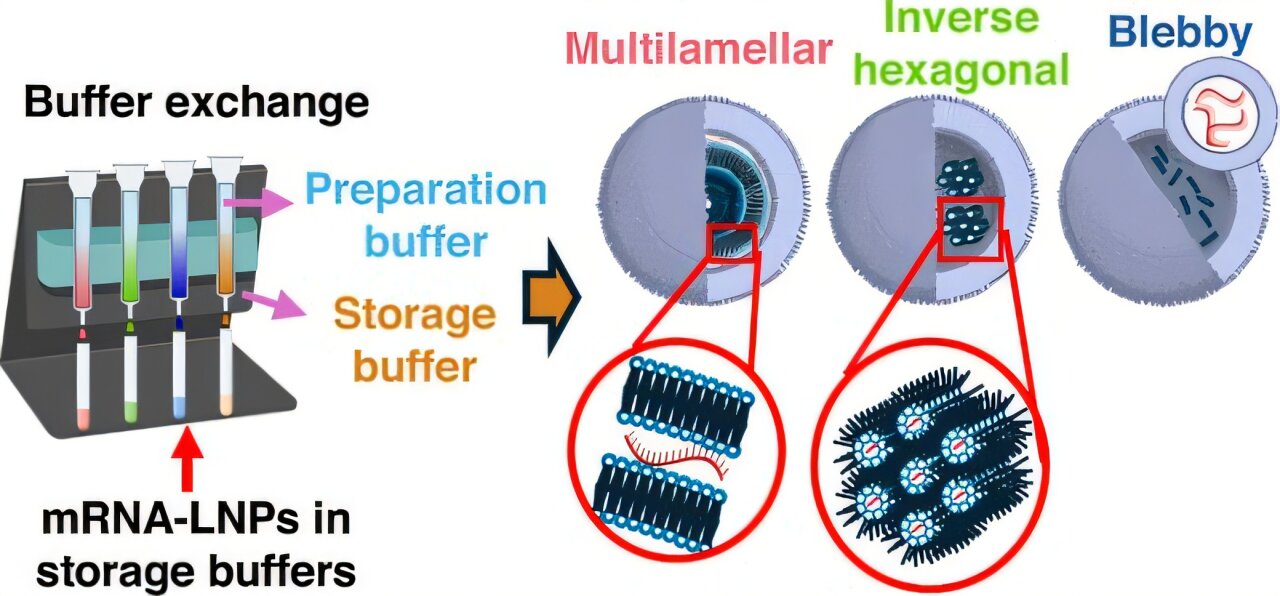
Freezing impacts vaccine delivery methods
Researchers examined how common freezing conditions used during storage and distribution alter the performance of mRNA lipid nanoparticles. These particles are essential for delivering vaccines and gene-editing therapies to patients effectively. The study highlights that standard freezing can threaten the potency of these treatments before they reach their destination.
Buffer choice changes particle structure
The team discovered that selecting specific storage buffers significantly shapes the internal structure of the nanoparticles. This structural change governs how efficiently the mRNA enters cells and converts into protein. Alex Marras noted that simple adjustments to the storage solution create a huge difference in therapeutic effectiveness.
New methods improve global shipping
Understanding how buffer molecules influence nanostructure helps make therapies more stable during worldwide shipment. The findings allow developers to ensure medicines remain effective even after being frozen and transported globally. This knowledge supports the creation of more robust treatments for various medical applications.
Reported by one outlet
Only one outlet has published this. Nothing here has been checked against a second report, so read it as that outlet's account and follow the link below for the original.
Reported by
1 independent outlet. Headline as published. Links open the original report.