Researchers find heavier electrons slow flow in alpha-gallium oxide
Scientists from Hokkaido University and Kyoto University report that added germanium changes electron mass in alpha-gallium oxide films.
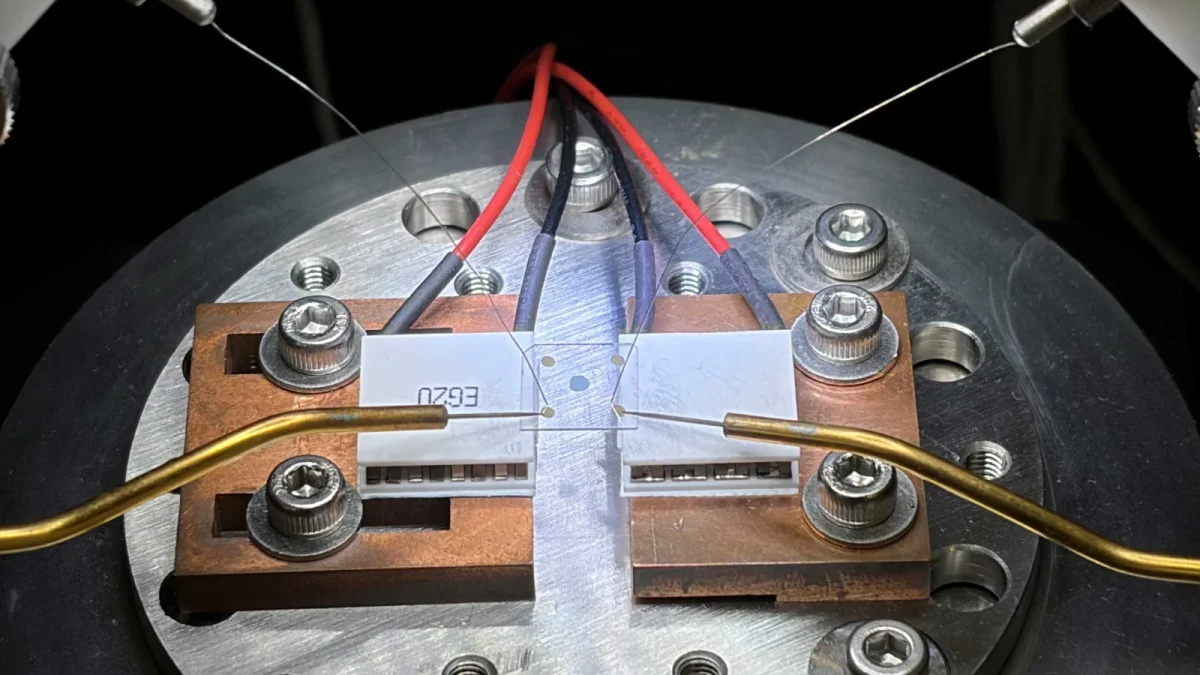
Measured electrical properties of films
Scientists from Hokkaido University and Kyoto University made thin films via mist chemical vapor deposition. They varied the amount of germanium to study how electron concentration affects electricity movement. The team first measured electrical properties including electron concentration and thermopower across the material samples. Then they estimated the effective mass of electrons inside the specific alpha-gallium oxide structure.
Unexpected mass difference found
The study found this effective mass was approximately 40 percent of a free electron's mass. This figure is higher than the theoretically predicted value of 25 percent for such materials. The difference could explain why electrons move less easily through alpha-gallium oxide than expected by models. Researchers also measured thermal conductivity at approximately 19 watts per meter-kelvin during these tests.
Heat transfer remains stable
Despite a significant rise in germanium concentration within the films, this thermal conductivity value stayed nearly constant. These combined findings indicate that incorporating germanium enhances electron mobility while leaving heat conduction in the substance largely unaffected. These findings offer a solid basis for creating upcoming power electronics capable of managing elevated voltages more effectively.
Reported by one outlet
Only one outlet has published this. Nothing here has been checked against a second report, so read it as that outlet's account and follow the link below for the original.
Reported by
1 independent outlet. Headline as published. Links open the original report.