Purdue researcher Alex Psomas reroutes excess food from landfills to pantries
Computer science expert Alex Psomas at Purdue University developed a system that redirects truckloads of wasted food from landfills to local food banks in the Midwest.
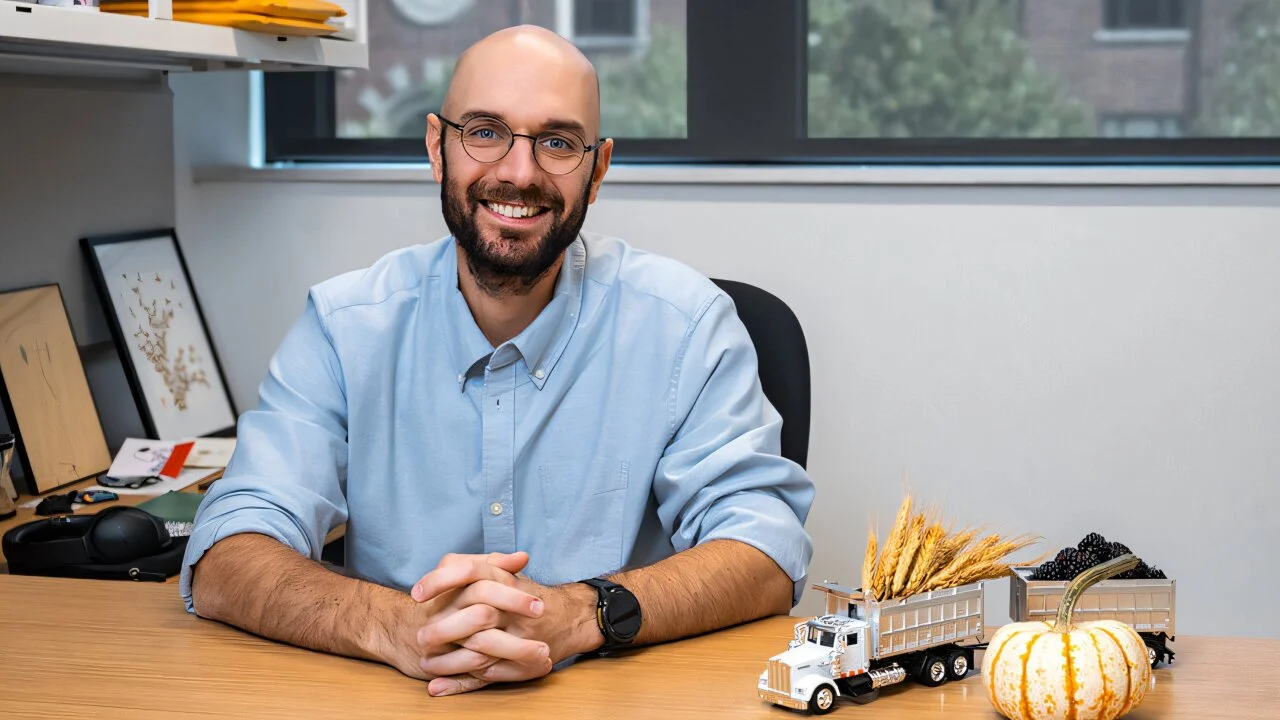
System optimizes delivery routes for surplus
Psomas created a program called Food Drop that uses machine learning and flexible algorithms to solve logistics problems. The software assesses food bank availability, available space, and specific item needs in real time. It then balances these priorities against truck locations to find the closest place where the food can do the most good. This approach helps save more than 50 tons of food from landfills so far.
Logistics issues cause significant food loss
Supply and scheduling issues cause hundreds of tons of food to be discarded prior to arriving at grocery store shelves. Late shipments often mean stores no longer need items like pumpkins for a specific date. If a shipment requires a forklift but the operator has gone home, the store may refuse the delivery entirely. Cleaning up spilled lettuce can sometimes cost more than salvaging the remaining pallets is worth.
Nonprofits handle cleanup with volunteers
A nonprofit might have a forklift operator standing by or volunteers willing to clean up damaged produce. Their cost-benefit analysis differs from farms trying to balance a bottom line regarding wasted shipments. Psomas noted that if the system makes it easy to do the right thing, drivers will reroute food nearby. The findings of this research are currently published on the arXiv preprint server for public review.
Reported by one outlet
Only one outlet has published this. Nothing here has been checked against a second report, so read it as that outlet's account and follow the link below for the original.
Reported by
1 independent outlet. Headline as published. Links open the original report.