Penn State researchers refine atom-scale model for silicon carbide crystal growth
Penn State scientists have developed a new atom-scale model to explain how silicon carbide transforms from solid to vapor during crystal growth.
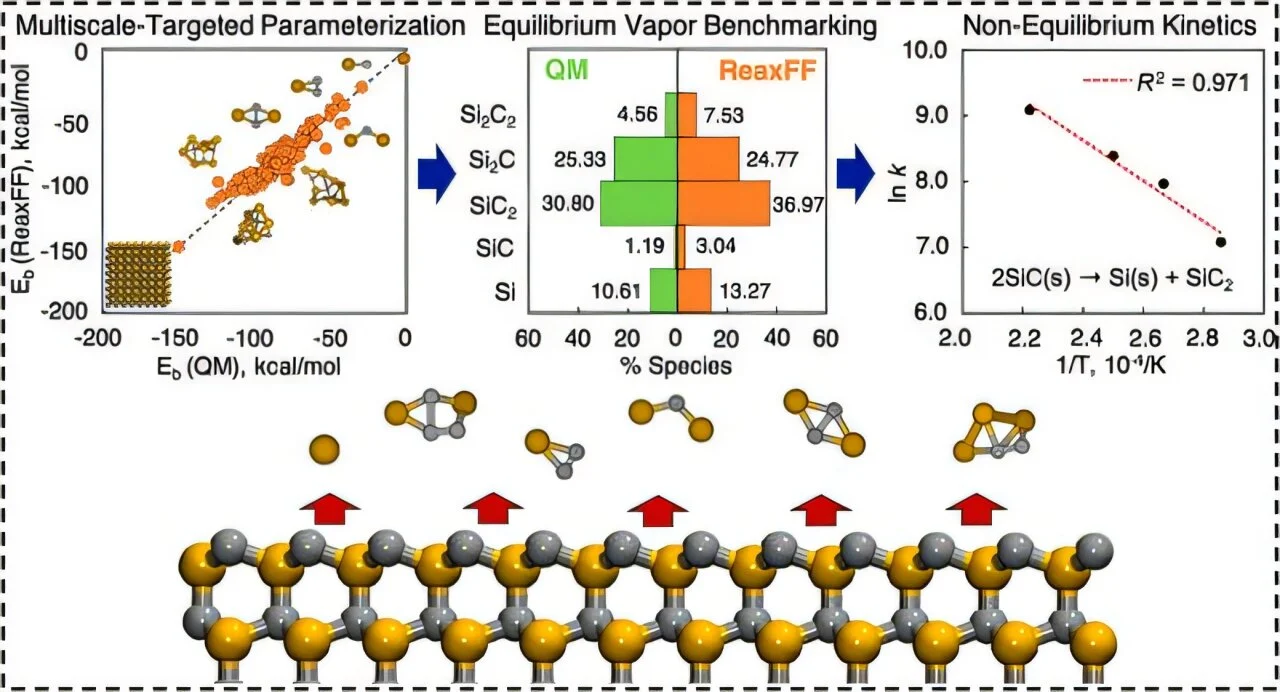
New model addresses observation limits
The study was published in The Journal of Physical Chemistry C. Researchers note that extreme temperatures inside closed furnaces make direct experimental observation nearly impossible. This work aims to reduce costly trial-and-error experiments for manufacturers.
Silicon carbide uses vapor transport
Unlike other crystals grown by melting and cooling, silicon carbide is produced using physical vapor transport. Solid material heats until it turns directly into vapor without becoming liquid first. The vapor then settles onto a seed crystal to build a larger structure.
Partnership supports advanced electronics
This publication marks the first output from Penn State's Silicon Carbide Innovation Alliance. The alliance is an industry-university research partnership focused on material quality. Applications include high-power electronics for electric vehicles and clean-energy systems.
Reported by one outlet
Only one outlet has published this. Nothing here has been checked against a second report, so read it as that outlet's account and follow the link below for the original.
Reported by
1 independent outlet. Headline as published. Links open the original report.