Istanbul researchers create sensor to detect invisible mercury traces
Researchers at Istanbul Technical University have developed a new molecular sensor that turns invisible mercury contamination into a visible color change and light signal.
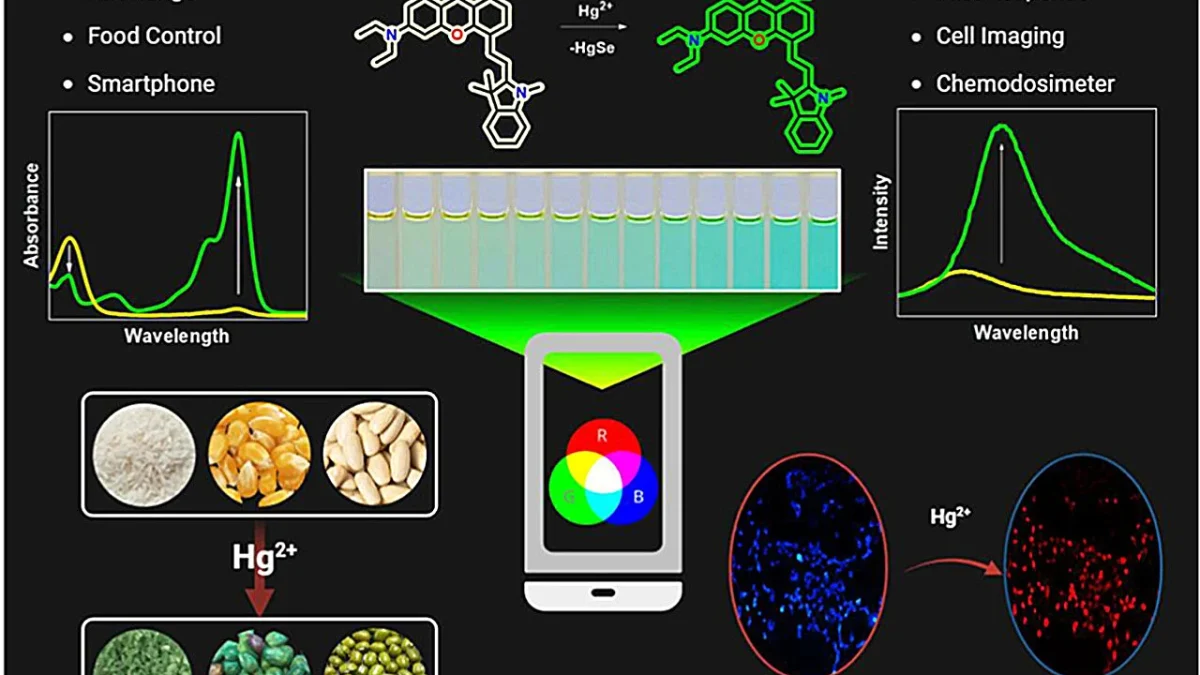
Sensor detects mercury instantly
The new device functions like a warning light that stays off until mercury ions are present. When these ions contact the sensor, it pulls on a molecular lock to open its structure. This chemical change causes the solution to shift from yellow to green while emitting near-infrared light. The process happens within approximately 10 seconds and remains stable for at least 20 minutes.
Smartphone reads color shifts
Using a Redmi Note 10S camera, the team analyzed red and green components to measure ion concentrations. This method detected mercury levels between 1.66 times 10 to the negative ninth M and 7.50 times 10 to the negative sixth M. The lower detection limit falls below the U.S. EPA maximum contaminant level for inorganic mercury in drinking water. Professor Ismail Yilmaz from the Department of Chemistry stated the goal is easier monitoring outside specialized labs.
Lab tests show high sensitivity
UV-visible spectroscopy detected ions at concentrations as low as 3.77 times 10 to the negative tenth M. Fluorescence measurements reached a detection limit of 4.54 times 10 to the negative ninth M during controlled experiments. The sensor offers multiple reading methods including direct observation and cellular imaging for future applications.
Reported by one outlet
Only one outlet has published this. Nothing here has been checked against a second report, so read it as that outlet's account and follow the link below for the original.
Reported by
1 independent outlet. Headline as published. Links open the original report.