Hubble Telescope Maps Galactic Bulge for Roman Mission
NASA's Hubble Space Telescope has captured detailed images of the Milky Way's galactic bulge to prepare data for the upcoming Nancy Grace Roman Space Telescope observations.
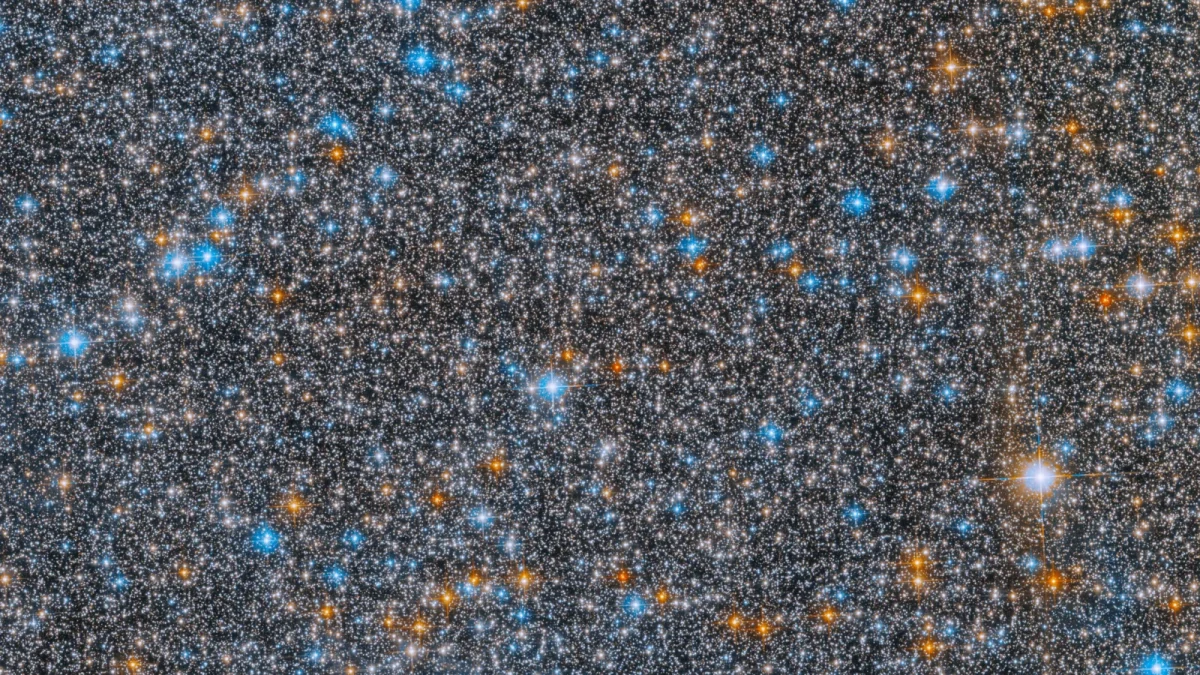
Hubble Captures Star-Rich Galactic Bulge
The Hubble Space Telescope recently imaged a dense region of stars located toward the galactic bulge, which surrounds the center of the Milky Way. This specific area holds nearly a quarter of the galaxy's total stellar mass and allows astronomers to examine individual stars in greater detail. While similar crowded spheres exist in other galaxies, their distance prevents researchers from resolving single stars within those distant systems. The new images display an expanse of stars gleaming in a rainbow of colors across ultraviolet, visible, and near-infrared light spectra.
Roman Mission Relies on Hubble Data
Researchers plan to use these Hubble observations to interpret future data collected by the Nancy Grace Roman Space Telescope. The upcoming Roman mission will collect information in near-infrared light and some visible wavelengths that overlap with Hubble's sensitivity range. By comparing current high-resolution Hubble data with future Roman measurements, scientists hope to characterize stars before they undergo specific gravitational lensing events. This groundwork helps identify potential exoplanets, locate black holes, and understand how galaxies evolve over billions of years.
Legacy Surveys Support Future Searches
Previous programs like the WFC3 Galactic Bulge Treasury Program have already studied star brightness and precise positions using Hubble's Wide Field Camera 3. Another initiative called the Sagittarius Window Eclipsing Extrasolar Planet Search examined 180,000 stars in the bulge using the Advanced Camera for Surveys. The current observing program designated as number 17776 was specifically designed to aid Roman in its search for exoplanets and neutron stars. These legacy surveys continue to add high-precision data to Hubble's long-standing record of observations within this congested part of our galaxy.
Reported by one outlet
Only one outlet has published this. Nothing here has been checked against a second report, so read it as that outlet's account and follow the link below for the original.
Reported by
1 independent outlet. Headline as published. Links open the original report.