Ancient Turkish rocks reveal deep Earth cooling journey
Researchers at Istanbul Technical University published a study in the Journal of Asian Earth Sciences detailing how ancient granitic rocks cooled and moved to Türkiye's surface.
New dating methods trace rock history
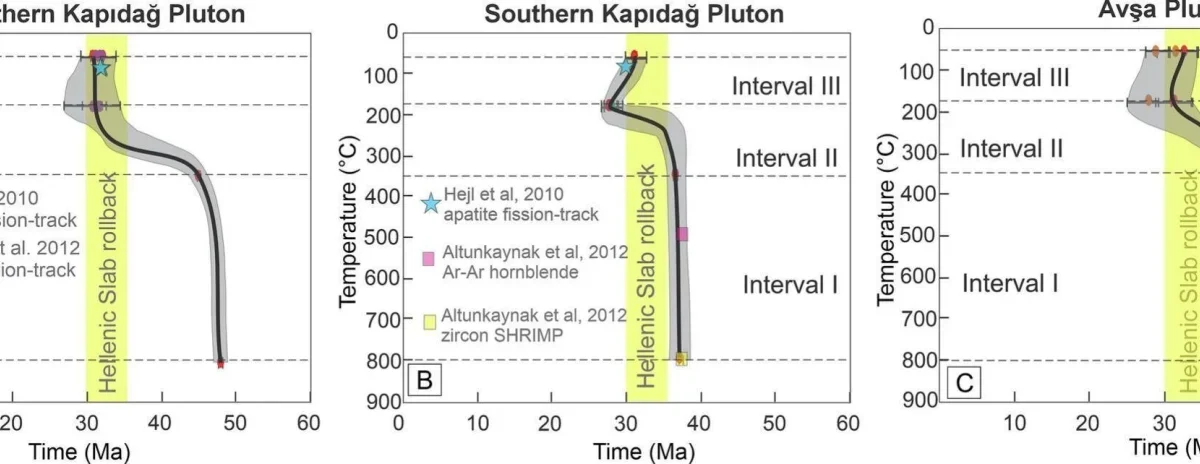
A team combined several mineral-based geological clocks to track cooling from 800°C down to 60°C. This approach identified two key stages in northwestern Anatolia's tectonic history involving rapid and slow cooling phases. The study focused on three specific granitic bodies located near the Marmara Sea southern shores and islands. These rocks originated as molten material deep within Earth's crust before reaching the surface today.
Complex geology drives magmatism
Northwestern Anatolia sits in the eastern Mediterranean where continental fragments collide and subduction occurs between African and Eurasian plates. Previous work dated granitoid emplacement between 57 and 41 million years ago linking events to slab break-off. The new research fills a gap by connecting emplacement depth with low-temperature history previously less explored. Results suggest the three plutons crystallized during distinct episodes roughly between 48 and 37 million years ago.
Rapid cooling followed by uplift
Initially rapid Eocene cooling occurred at estimated rates of 150 to 200°C per million year. The rocks cooled from approximately 800°C to about 350°C during this initial fast phase. Subsequent slowing happened between roughly 350°C and 180°C before another phase of rapid cooling began later. These findings illustrate the uneven journey from deep magma formation to exhumation in the region.
Reported by one outlet
Only one outlet has published this. Nothing here has been checked against a second report, so read it as that outlet's account and follow the link below for the original.
Reported by
1 independent outlet. Headline as published. Links open the original report.