Japanese researchers test fungus against strawberry mildew
A team from Japan, Hungary and Australia reported that a specific beneficial fungus can suppress powdery mildew on strawberry leaves in laboratory tests.
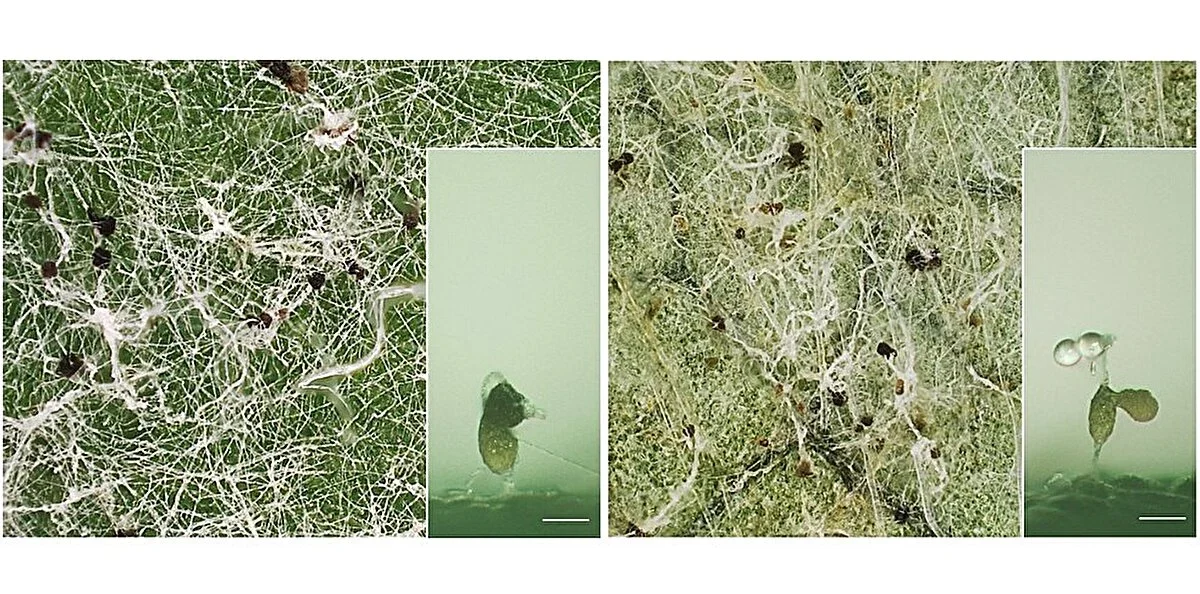
Fungus attacks pathogen spores
Professor Teruo Nonomura led the study alongside colleagues from Kindai University, HUN-REN Center for Agricultural Research and the University of Queensland. The team applied Ampelomyces strain Xs-q spores to colonies of Podosphaera fragariae growing on strawberry leaves in controlled environments. Digital microscopy showed that the parasite invaded the mildew fungus and damaged its spore-producing structures known as conidiophores. Under greenhouse conditions, these structures deteriorated and collapsed completely within eight to nine days after inoculation. No conidia were collected from colonies treated with the beneficial fungus under either tested condition.
Environmental factors shape results
In growth chamber settings, mature pycnidia developed inside the foot cells of the mildew conidiophores by eleven to twelve days after inoculation. These structures formed predominantly near the base of the conidiophores in both upper and lower leaf surfaces. The researchers noted that humidity or light conditions might influence how the parasite develops inside its fungal host. Specific factors contributing to these differences remain to be established by further investigation. This variation indicates that environmental conditions significantly affect the infection process.
Study offers new control path
Professor Nonomura stated that finding alternatives to repeated fungicide use is important as resistant populations have emerged. The study provides a basis for using mycoparasitic activity to stop detectable spore release on strawberry leaves. Preventing spore release helps reduce disease spread to other plants without relying on chemical treatments. The findings were published online in the journal Mycological Progress by the international research group.
Reported by one outlet
Only one outlet has published this. Nothing here has been checked against a second report, so read it as that outlet's account and follow the link below for the original.
Reported by
1 independent outlet. Headline as published. Links open the original report.