Adelaide University researchers warn climate change and habitat loss could increase deadly bat-borne disease risks globally
Researchers from Adelaide University published an international review in The BMJ warning that climate change and habitat destruction are increasing the risk of deadly bat-borne diseases spreading to humans.
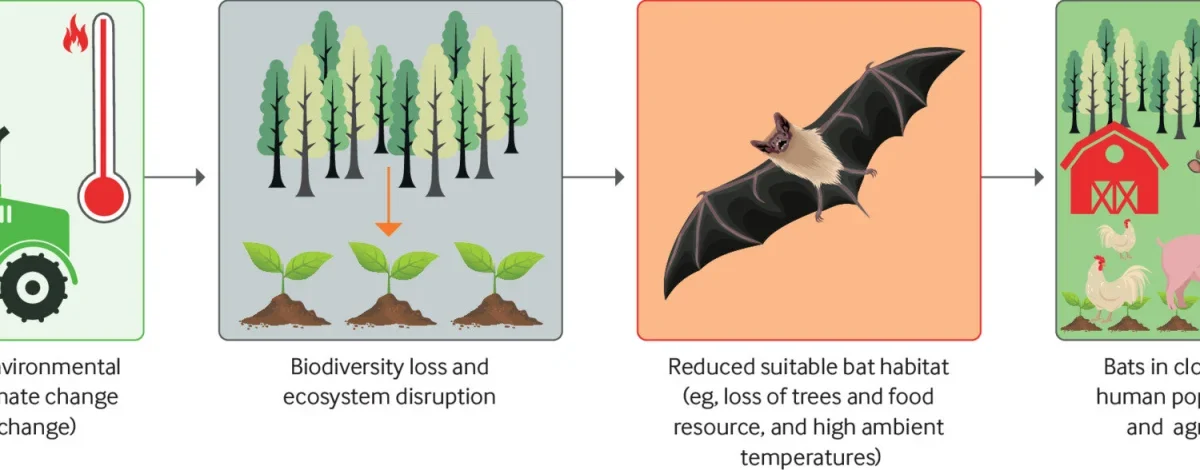
Review examines dangerous pathogens
Researchers from around the globe studied how to transmit, prevent and handle hazardous illnesses carried by bats such as Ebola, Marburg, Nipah, Hendra and Australian bat lyssavirus. The study notes rising temperatures and deforestation are disrupting natural ecosystems while changing where bats live and find food. These environmental shifts increase opportunities for contact between bats, humans and domestic animals according to the new findings.
Habitat loss forces closer contact
Dr Jessica Stanhope, lead researcher at Adelaide University's School of Medicine, noted that climate change is intensifying stress on bat groups globally. She explained that shrinking natural habitats force bats to adapt and potentially bring them into closer contact with people. Emeritus co-researcher Professor Philip Weinstein of Adelaide University's School of Public Health noted that habitat loss happens in cities when trees are removed for urban construction.
Agriculture expands virus spread risk
According to Weinstein, the destruction of living spaces and nutrition drives bats toward humans, thereby increasing chances for illness transmission. As agricultural expansion encroaches on natural habitats, bats interact more closely with livestock, thereby enabling viruses to jump between different species. This assessment highlights bat-borne pathogens that the American Public Health Association has flagged as major public health issues.
Reported by one outlet
Only one outlet has published this. Nothing here has been checked against a second report, so read it as that outlet's account and follow the link below for the original.
Reported by
1 independent outlet. Headline as published. Links open the original report.