Ancient Snail Species Named After Prodigy Singer Flint
Researchers in Hungary have named a nearly 100-million-year-old hairy snail found in Myanmar amber Archaeospirostoma flinti after The Prodigy's lead singer Keith Flint.
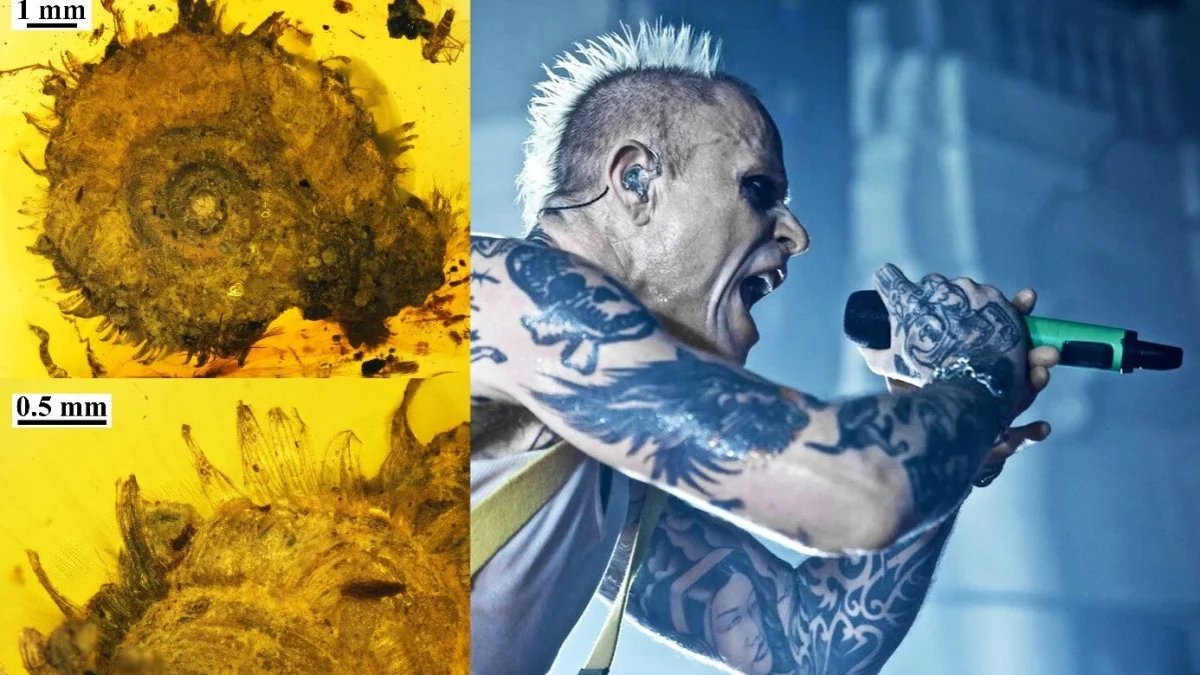
New Species Identified In Amber
A collaboration between Hungarian and Chinese scientists identified a terrestrial snail preserved in approximately 99 million-year-old amber from Myanmar. The specimen dates to the Mesozoic Era, a period known for dinosaur dominance and rich biodiversity records. Researchers utilized micro-CT scanning at the University of Szeged to create a detailed digital model without damaging the fragile sample. This technique allowed them to examine soft tissues like the protein-based periostracum layer covering the shell in three dimensions.
Distinctive Hairs Honor Deceased Star
The new species, Archaeospirostoma flinti, belongs to the Cyclophoridae family and is the ninth member found within this specific amber source. Its shell features unique flat fringes of hairlike appendages rather than the individual projections seen in other known hairy species. The name specifically honors Keith Flint, who died in 2019, because his distinctive hairstyle matched the arrangement of these shell hairs. Dr Barna Páll-Gergely noted that the preserved operculum shape is entirely unique among Burmese amber members of this family.
Micro-CT Scanning Enables Discovery
Márton Szabó explained that recent advances in micro-CT scanning have sparked a renaissance in studying snails preserved in Burmese amber. This method permits scientists to scan tiny, extremely fragile inclusions as risk-free three-dimensional models for detailed description. The resulting paper detailing this discovery has been published in the journal Ecologica Montenegrina by the involved research institutions. Seven other hairy species exist within this family from the same amber source, but their hair arrangements differ significantly.
Reported by one outlet
Only one outlet has published this. Nothing here has been checked against a second report, so read it as that outlet's account and follow the link below for the original.
Reported by
1 independent outlet. Headline as published. Links open the original report.