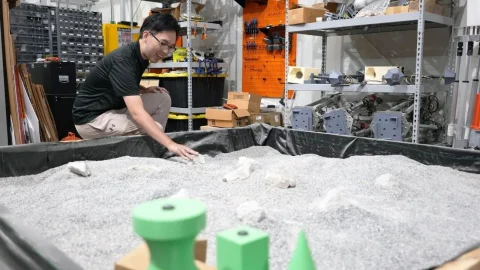
Virginia Tech researchers develop vibration tools for planetary surface scanning
Virginia Tech engineers have published new research on using terrain vibrations to detect subsurface rocks for safe spacecraft landings.
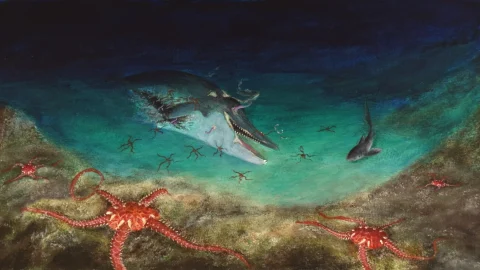
Researchers identified a new brittle star species gathered around a dead whale carcass at Gram Clay Pit in southern Denmark 9.5 million years ago.
UC Riverside biologist Bryan Jennings published a study in the Evolutionary Journal of the Linnean Society proposing that shifts in body size initiate physical differences between species before resource competition begins.
Adelaide University researchers are creating a virtual reality platform to help stroke survivors practice conversations in a safe digital environment.
Researchers at the SETI Institute in Northern California have launched a multiyear project using game theory to predict when an extraterrestrial civilization might send a message from the anti-solar point.
A new Danish study suggests Stone Age hunters in northern Europe used poisoned small arrowheads to hunt large prey during the early Mesolithic period between 9000 and 3950 B.C.
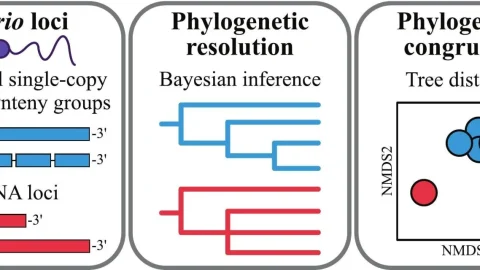
Scientists at the EHU demonstrate that single-copy genes serve as better markers than traditional methods for distinguishing closely related Vibrio bacteria in marine water samples.
Researchers from the University of Sharjah published a study on samāʿāt marginalia found in Arabic manuscripts held in libraries worldwide.
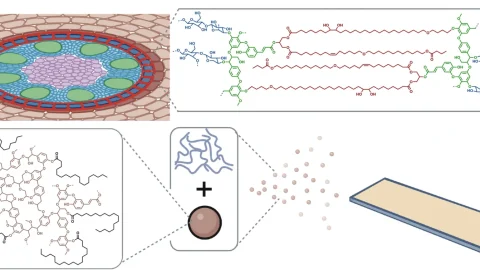
Researchers at Washington University in St. Louis developed a new waterproofing material made from lignin that can replace polyfluoroalkyl substances.
Scientists from the University of Regensburg and international partners published findings in Applied Physics Reviews showing a single measurement cuts quantum bit error rates by more than half.