Archaeologists find infant buried with hen in Roman jar
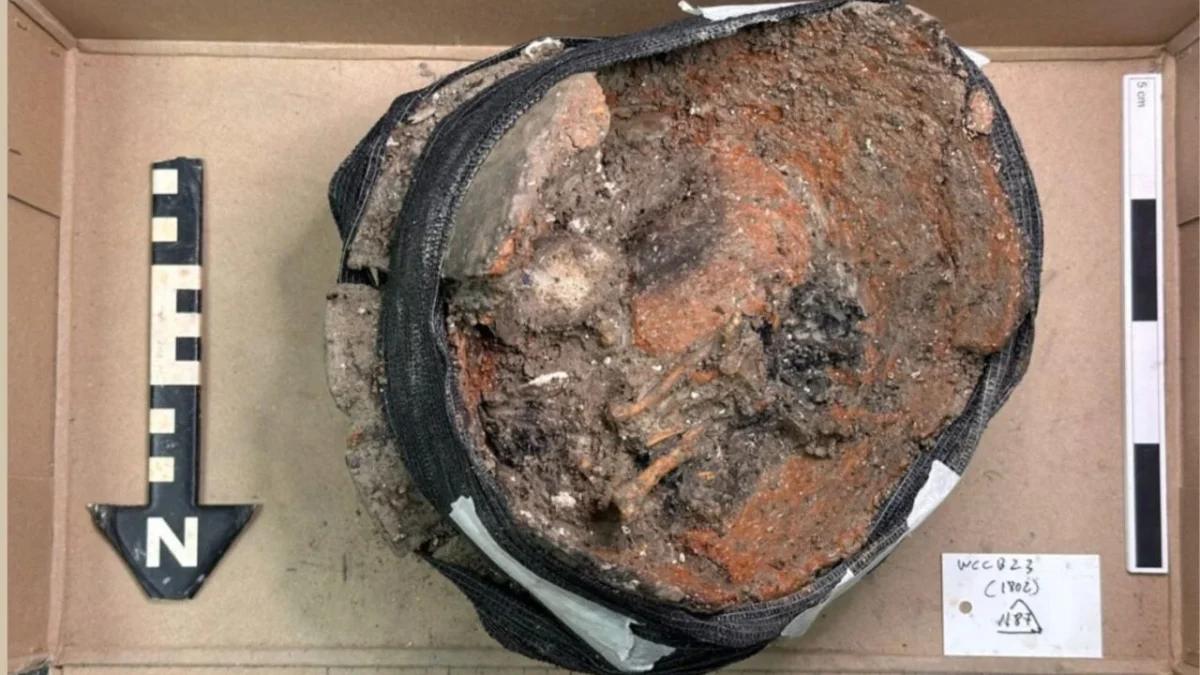
Cotswold Archaeology uncovered a unique Roman burial of an infant inside a pottery vessel alongside a hen and songbird at the Wendover Cricket Ground site.
Rare Burial Discovered During Construction
Archaeologists unearthed nine burials during work before building the new Wendover Cricket Ground. Four were adult cremation burials while five involved infants and young children. One specific site held a nine-month-old child at the bottom of an upside-down pottery vessel. A mature hen and a songbird rested at the entrance above the infant remains. Radiocarbon dating placed the child between 131 and 329 CE with the chicken dated to 237-346 CE.
Context of Roman Funerary Practices
Burying infants inside vessels was common around the Mediterranean but rare in Britain. Experts suggest parents might have been immigrants from that region. Chickens were considered luxury food and possibly offered as votive gifts for the dead. Nearby graves included a newborn and a six-month-old infant close to corn dryers. Rituals linking agriculture like harvesting often connected to fertility beliefs in this era.
Significance of Agricultural Connections
The infant remains were disturbed and not complete when found by the team. Corn dryers used for grain drying are associated with these specific burial locations. Theoretical links exist between agricultural activities such as threshing and fertility rituals. This discovery might be a first of its kind for Britain overall.
Reported by one outlet
Only one outlet has published this. Nothing here has been checked against a second report, so read it as that outlet's account and follow the link below for the original.
Reported by
1 independent outlet. Headline as published. Links open the original report.