Yale researchers use MicroED to locate hidden hydrogen in cobalt crystals
Yale scientists report that a microcrystal electron diffractometer can accurately find hydride atoms in cobalt-hydride structures better than standard X-ray methods.
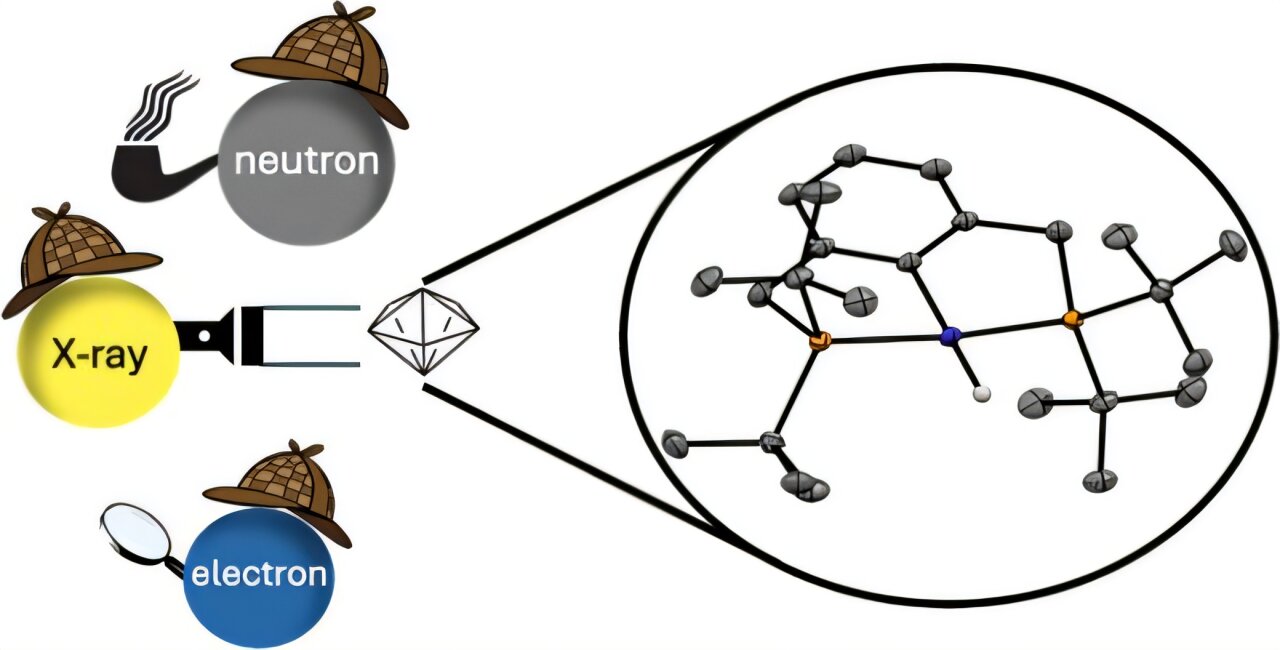
Standard tools miss small hydrogen atoms
Hydrogen is the lightest atom and plays a major role in chemical reactions for fuel, medicines, and materials. Standard X-ray crystallography often fails to see these atoms because large metal atoms block the view of the tiny hydrogen. Neutron crystallography offers an alternative but has its own limitations regarding practicality.
MicroED reveals hydride locations clearly
Patrick Holland, a senior co-author at Yale, stated that the microcrystal electron diffractometer locates hydrides more accurately than X-ray techniques. This new method provides a practical path for researchers to identify and measure hydride positions reliably. The study published in ACS Central Science shows how this system helps design better catalysts.
Reported by one outlet
Only one outlet has published this. Nothing here has been checked against a second report, so read it as that outlet's account and follow the link below for the original.
Reported by
1 independent outlet. Headline as published. Links open the original report.