University of Michigan researchers create rulebook for stable dilute alloy catalysts
Researchers at the University of Michigan Engineering have published a new stability rulebook for dilute alloy catalysts in the Journal of the American Chemical Society.
Designing materials with specific properties
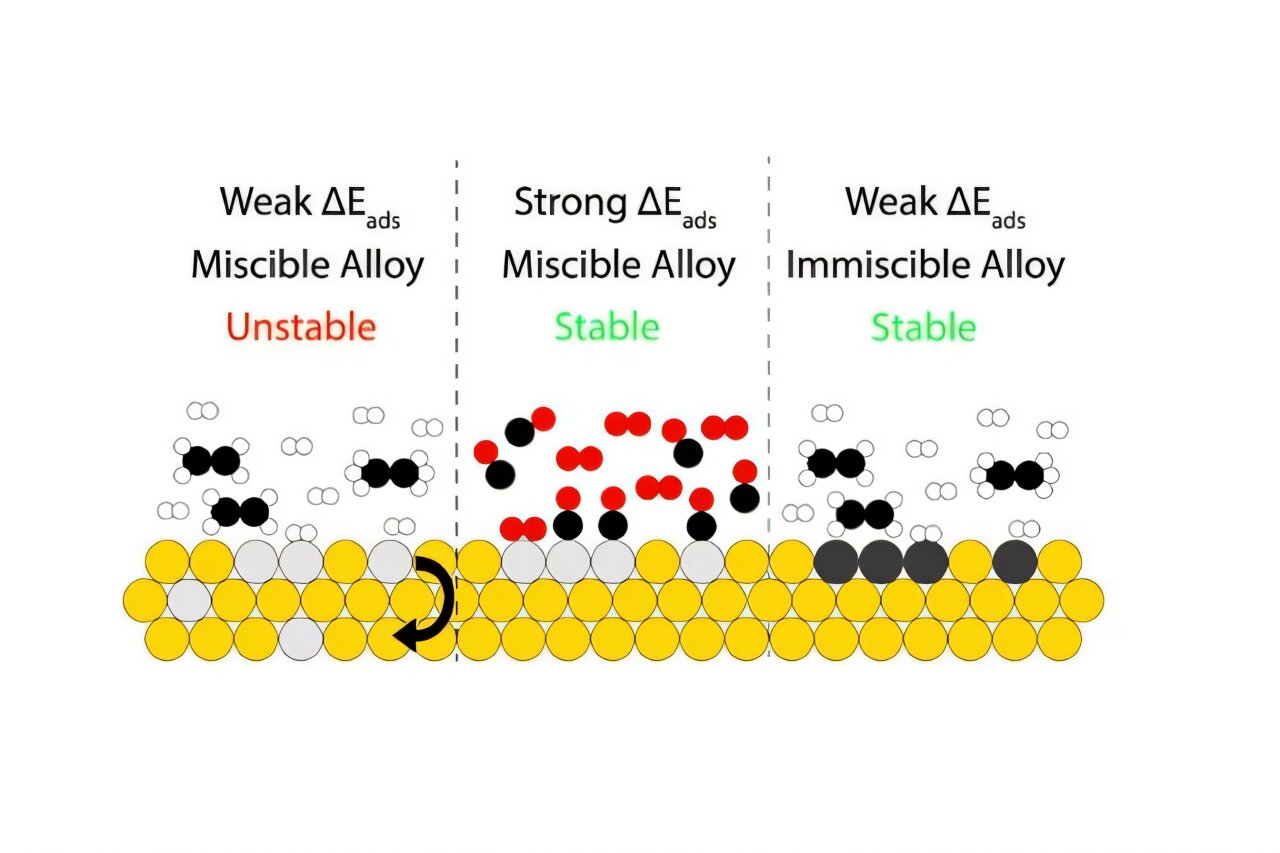
These catalysts consist of a tiny amount of active dopant metal dispersed within an inert host metal. The new guidelines help industrial chemical reactions use less precious metal while extending the lifetime of the catalyst.
Overcoming traditional reaction limits
Conventional single-metal catalysts often slow down because strengthening bonds for one step interferes with the next. Dilute alloys break this constraint by distributing reaction steps among different active sites to maintain efficiency.
Addressing heat stability issues
Surface dopant atoms can dissolve into the interior of the host metal when exposed to high temperatures. This process deactivates the catalyst, which is why the new rulebook focuses on preventing such dissolution.
Reported by one outlet
Only one outlet has published this. Nothing here has been checked against a second report, so read it as that outlet's account and follow the link below for the original.
Reported by
1 independent outlet. Headline as published. Links open the original report.