Two Hominin Lineages Found in Southern China Caves
Researchers identified Denisovan-affinity remains and an unresolved archaic human lineage from four teeth found in Guangxi caves between 104,500 and 42,600 years ago.
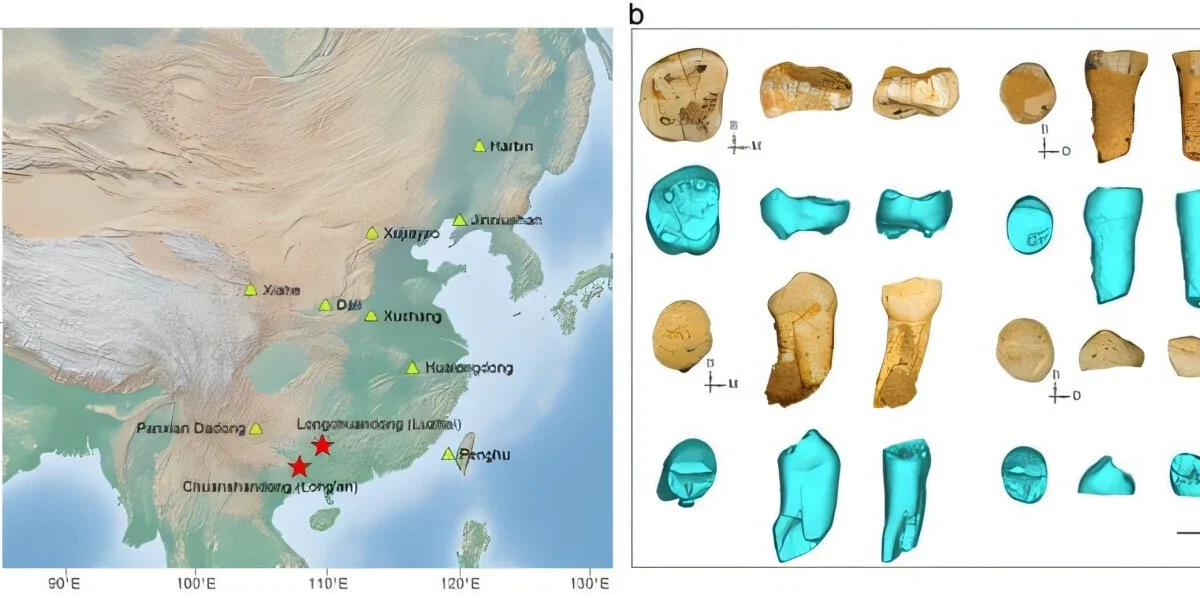
New Fossils Reveal Ancient Diversity
An international team analyzed four isolated teeth recovered from Chuanshandong and Longchuandong caves in Guangxi province. These specimens date to the Middle and Late Pleistocene, spanning a period from 104,500 years ago down to 42,600 years ago. The study confirms the presence of at least two distinct hominin lineages within this southern Chinese region. One group shows strong similarities to known Denisovans while the other remains taxonomically unresolved.
Molecular Analysis Identifies Lineages
The Longchuandong fossils display dental morphology and amino acid polymorphisms matching Altai Denisovans from Siberia. Paleoproteomic analysis successfully recovered enamel proteins from three teeth, all belonging to male individuals despite warm local conditions. In contrast, the Chuanshandong hominin carries an ancestral variant shared with Homo antecessor and great apes. While this second lineage carries a variant diagnostic for East Asian Middle Pleistocene Homo erectus, it does not contain specific Denisovan markers.
Implications for Human Evolution
These findings indicate diverse populations inhabited subtropical China during the Middle and Late Pleistocene eras. The discovery extends the known geographical distribution of Denisovans into the Lingnan transitional zone between tropical and subtropical regions. Researchers suggest the unresolved lineage may represent a primitive human group that survived in southern refugia. This evidence challenges previous assumptions about hominin diversity in East Asia.
All 2 outlets report consistently
No differences in figures, names or dates across these reports.
- Nature
- Phys.org
Reported by
2 independent outlets. Headlines as published. Links open the original report.